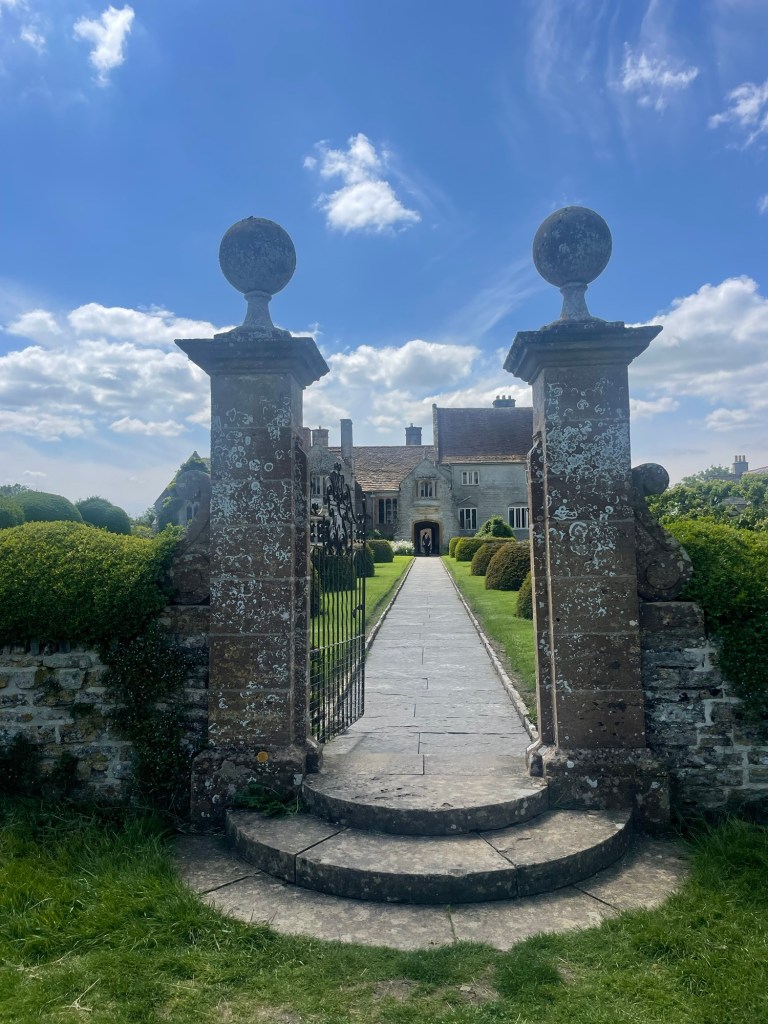
National Trusting is often a great reminder of how much some people love history and how far they are willing to go to preserve it.
Sir Walter Jenner and his wife Flora were two of these people. In 1907, they bought Lytes Cary Manor and were probably horrified to find that this medieval property, soaked in history, was also soaked in cider from the press set up in the great hall, and in engine oil from the farm machinery being stored throughout the rest of the building.
The pair set about restoring the house to its former 17th Century glory, built a modern wing for the house, and enjoyed living there for the rest of their days. And then, once Sir Jenner died, he gifted the house to the National Trust, ensuring this piece of history was never used for storing tractors ever again.
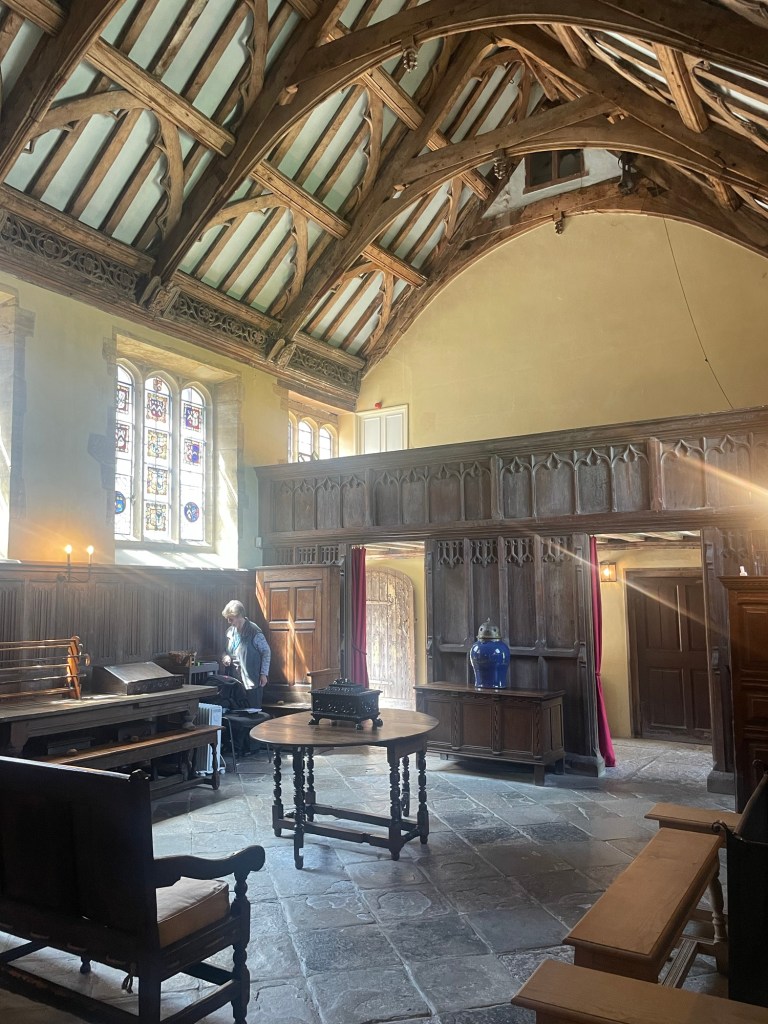
The house itself is everything you’d expect from a medieval manor house: a grand hall with a sizeable fireplace, four poster beds and heavy tapestries, and rich wooden panelling making most rooms very dark.
The Great Hall was built by Thomas Lyte in 1453 (think Henry VI, the end of the Hundred Years War with France, and the beginning of the War of the Roses) and even this was on the foundations of a 13th Century house (think Henry III and the signing of the Magna Carta). The Lyte family had been tenants of the land for a long time, and at some point their loyalty was rewarded with ownership which led to a gradual expansion of the Manor.

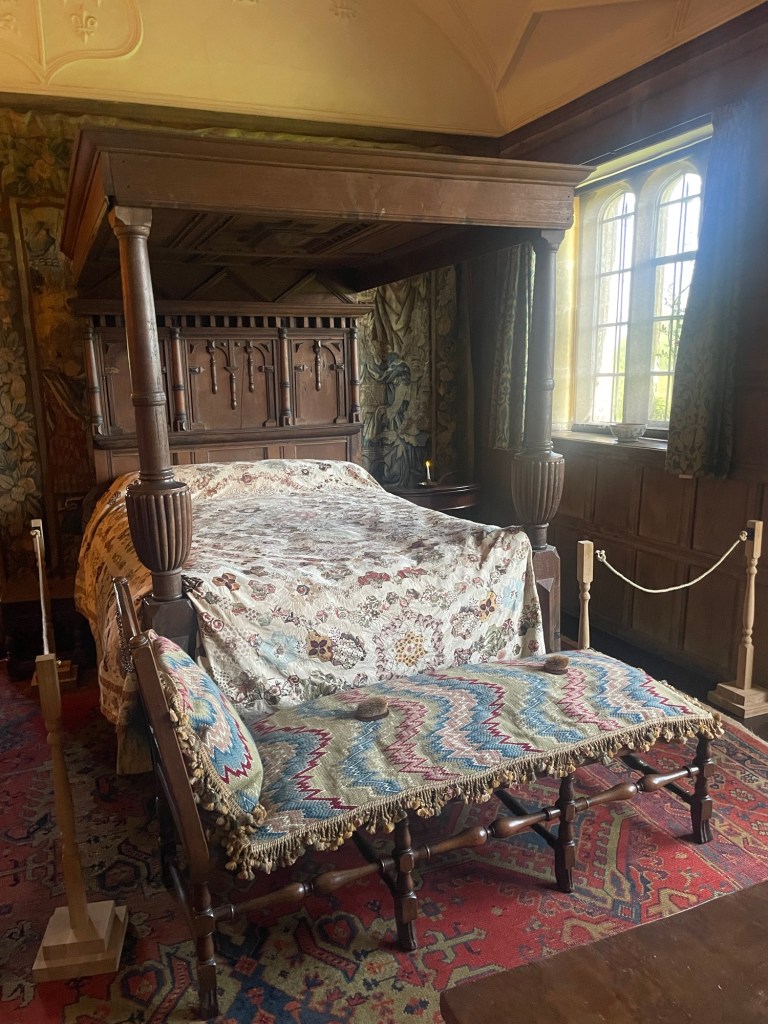
Up a steep stone staircase is the Grand Chamber – the main bedroom for the lifetime of the house. An exquisite four-poster bed is the main attraction, but the grandeur is solidified with a dressing table dappled with light from in large bay window, and an ornate ceiling – one of the first of its kind in the county.
Between the Lytes and the Jenners, the house was sold to a local MP in 1755 in order to help the Lytes out of their financial difficulty. The building slipped into disrepair and the ground floor was used to store farming equipment.
As aspects of the house were returned to its former medieval glory, many areas remain truer to the life lived by the Jenners in the first half of the 20th Century.
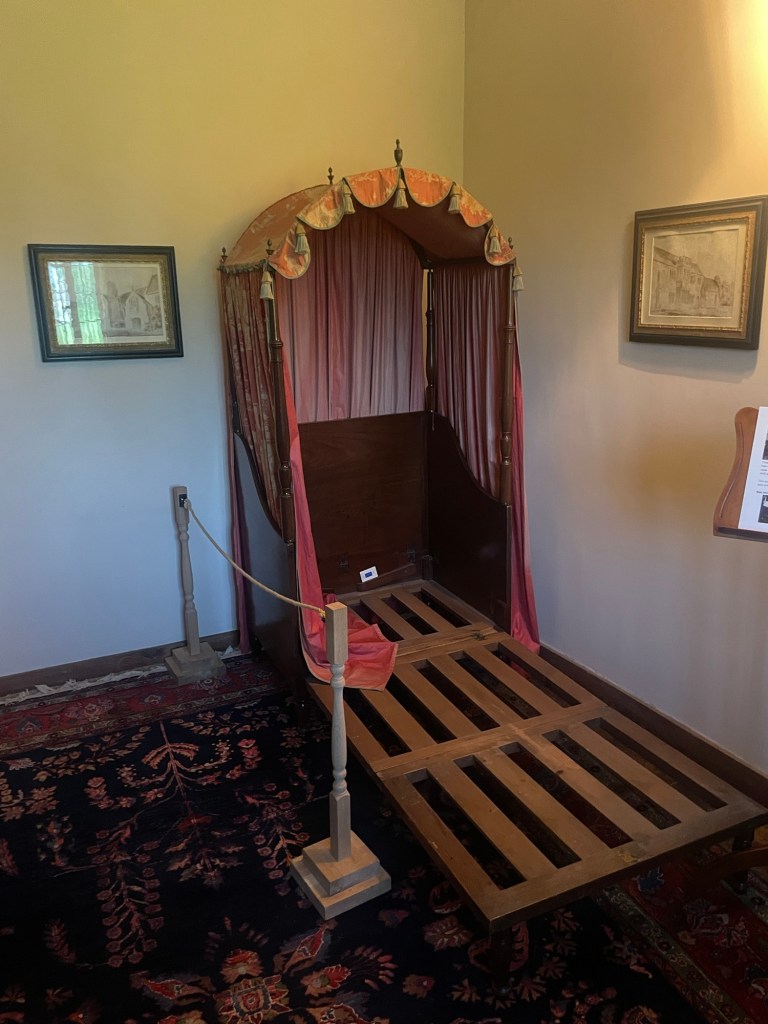
A room adjoining the Great Chamber became Esme’s bedroom when she was a child, and now houses an example of a campaign bed – a type of bed used mostly by officers in the military and which could be quickly put up or packed down.
Further down the corridor was a second bedroom – this one much darker and home to a mahogany four-poster bed. Strangely, the dinginess is apt for the eventual purpose of this room.
Once Flora had died, Sir Walter become ever more reserved, and retreated to sleep in this room, presumably no longer able to bear being alone in the marriage bed in the Great Chamber. Sir Walter insisted that tea should be served promptly in this room at six o’clock each morning, and he reverted to writing handwritten notes to his servants, rather than speaking to them.

Further evidence of the life of the Jenners is seen downstairs, both in the living room and an austere study.

The living room is the one most in the style expected of the 1900s, and was where the family took their tea in the afternoons, before being joined by peacocks tapping on the window in search of crumbs. The two creepy leather figures are believed to be ‘good companions’ who would be brought to the dinner table in the event of having an unlucky number of 13 guests, to stave off the death which could result from that.
Further down the corridor on the ground floor was ‘the little parlour’, adopted by Sir Walter as his own private study.

Religion appears to have played an important part in the history of the house and its tenants too.
A beautiful chapel was built next to the house in 1348, although also believed to have replaced an existing chapel. In the fallow years between the Lytes and the Jenners it became a calf shed, and was carefully restored by the Jenners in 1912, including using medieval stained glass sourced from another church. Heartbreakingly, Sir Walter and Flora’s only daughter, Esme, died of pneumonia aged just 37, and is commemorated in the church.
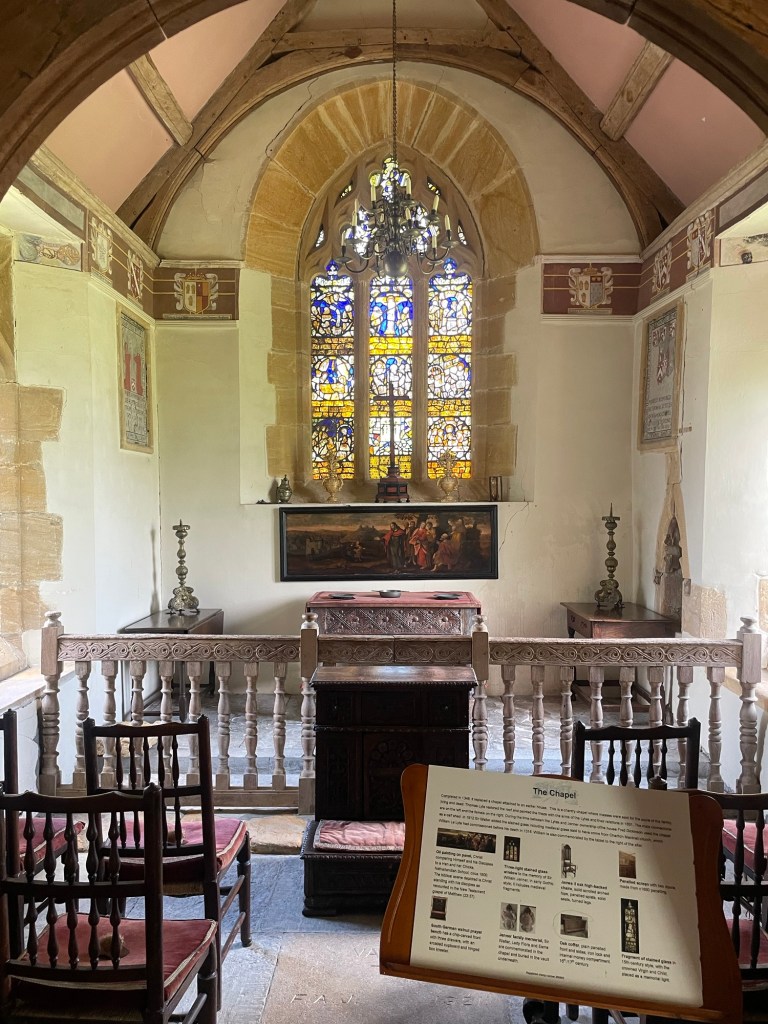
In addition, a small chapel room attached to the house was built and was where the family said their masses, presumably their daily ones with the chapel reserved for Sundays.

The Jenner family appear to have been all-round good people. From Esme retraining horses throughout the First World War, to Flora volunteering for the Red Cross and funding ambulances, and Sir Walter being away and probably supporting the war effort.
Finally, in 1948 Sir Walter died and bequeathed his beloved Manor to the National Trust. Today the modern wing of the house he added on is now a holiday let for 12 people, and the rest of the medieval property preserved through the hundreds of visitors who walk through the doors each year. What an amazing legacy.

Verdict: A grand legacy by preserving a piece of medieval history – simply thanks one man’s love of history.
 A Year of Trust