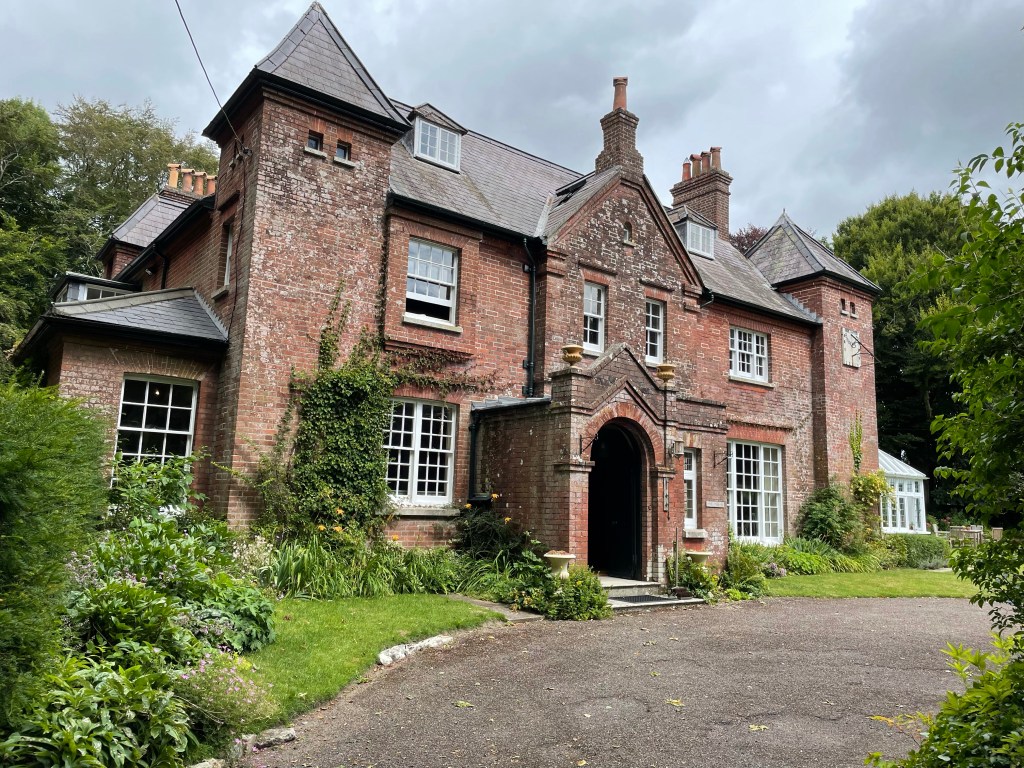
Did you know Thomas Hardy kept his wife in the attic a la Mrs Rochester? No, neither did I. That’s the beautiful thing about National Trusting – each visit lets you walk where others have and get a glimpse of the life they really lived. And like his writing, Thomas Hardy’s life at Max Gate was fairly depressing.
Picking up from my last blog post about Hardy’s Cottage, in his role as an architect Hardy visited Cornwall to help with the restoration of a church, where he met Emma, the vicar’s daughter. They fell in love, but her family refused to let him marry her, and Thomas’s mother was more anti-marriage than a polygamous cult leader, so after four years of trying to convince their families, they eloped to London and married there.
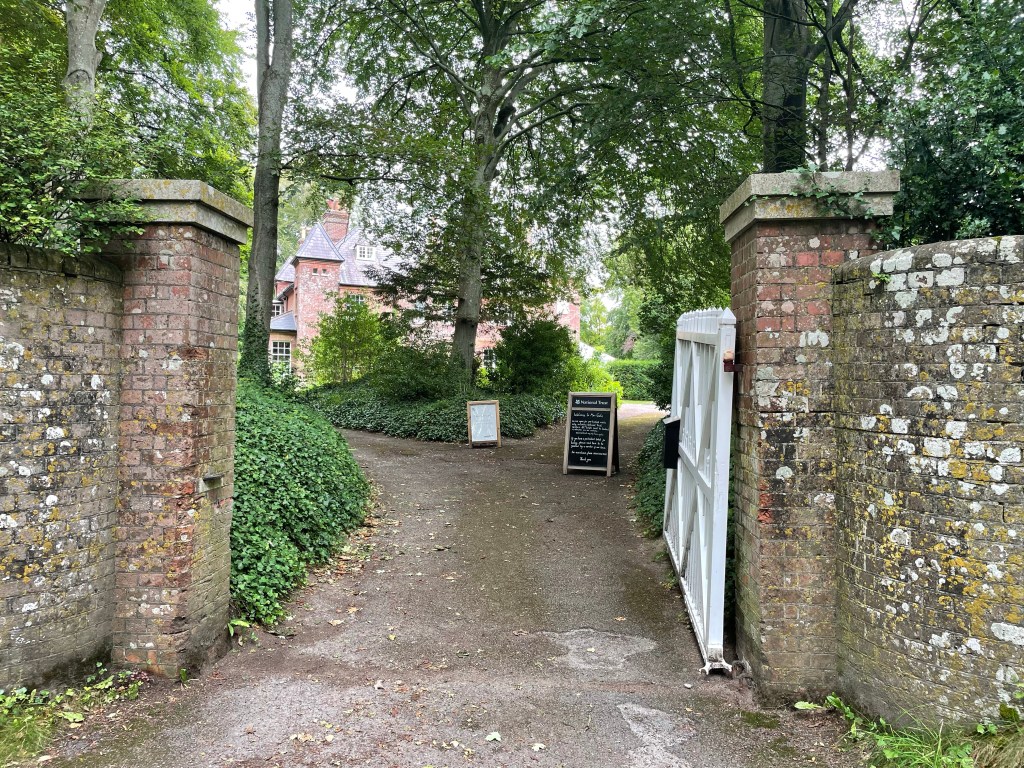
It wasn’t long before Hardy was yearning for his home county of Dorset, and so he bought a plot of land three miles down the road from his childhood home and designed a modest home for him and his new wife. His brother helped him to build it, and it was named Max Gate, possibly after a gatekeeper called Mack.
During construction, they kept digging up skeletons and some really big rocks, and it soon transpired that the plot had been the site of a stone circle pre-dating Stonehenge, and an ancient burial ground.
Other than making a nice feature of a couple of the stones in the garden, and asking his brother not to tell his wife as it would freak her out, it doesn’t appear much further thought was given to this historically significant site, and construction continued. In fact, a croquet lawn was laid over part of the site.
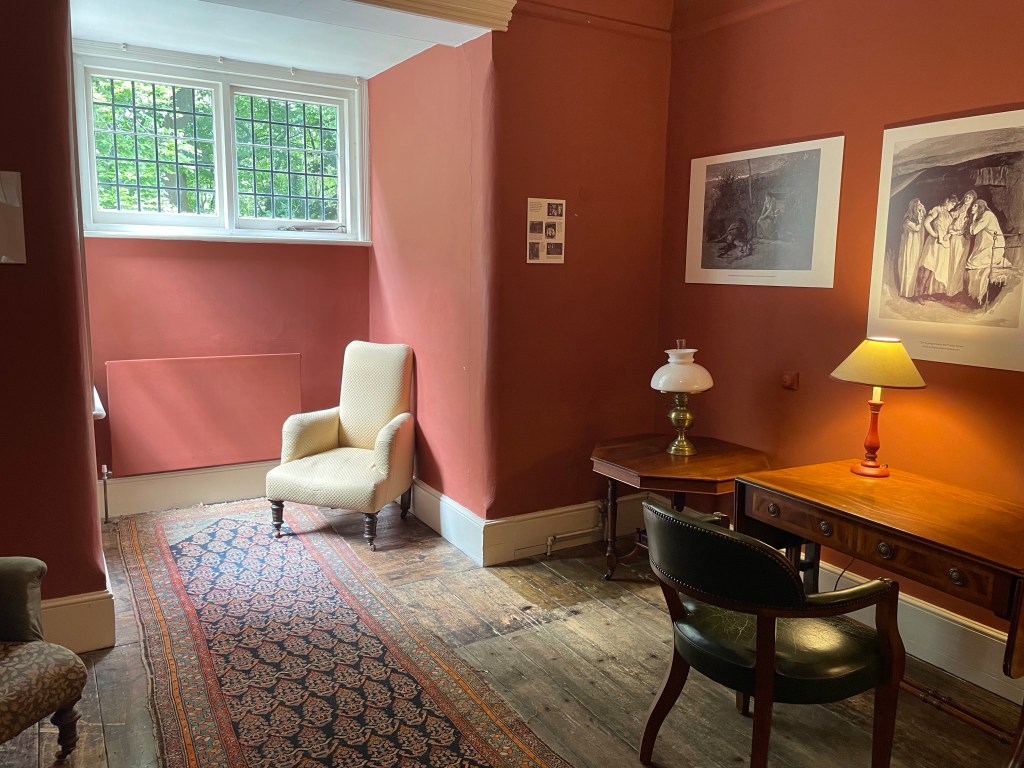
Hardy continued his writing at Max House, mostly in one of the upstairs bedrooms, including Tess of the D’Urbervilles, and his fame continued to grow. Hardy had shutters fitted on the downstairs windows as overzealous fans would regularly traipse up his driveway and peer in the windows in the hopes of seeing their beloved author.
It appears Emma thanklessly helped Hardy with his writing by putting his notes into long-hand and getting them off to the publishers, although she is never acknowledged in any of his works.
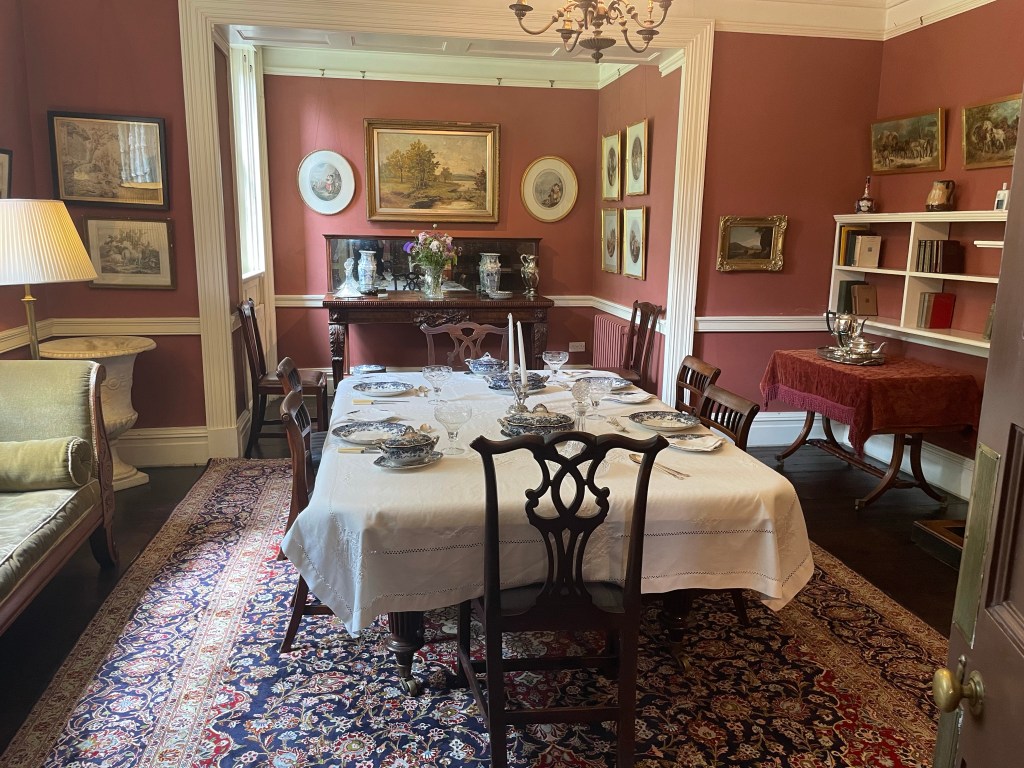
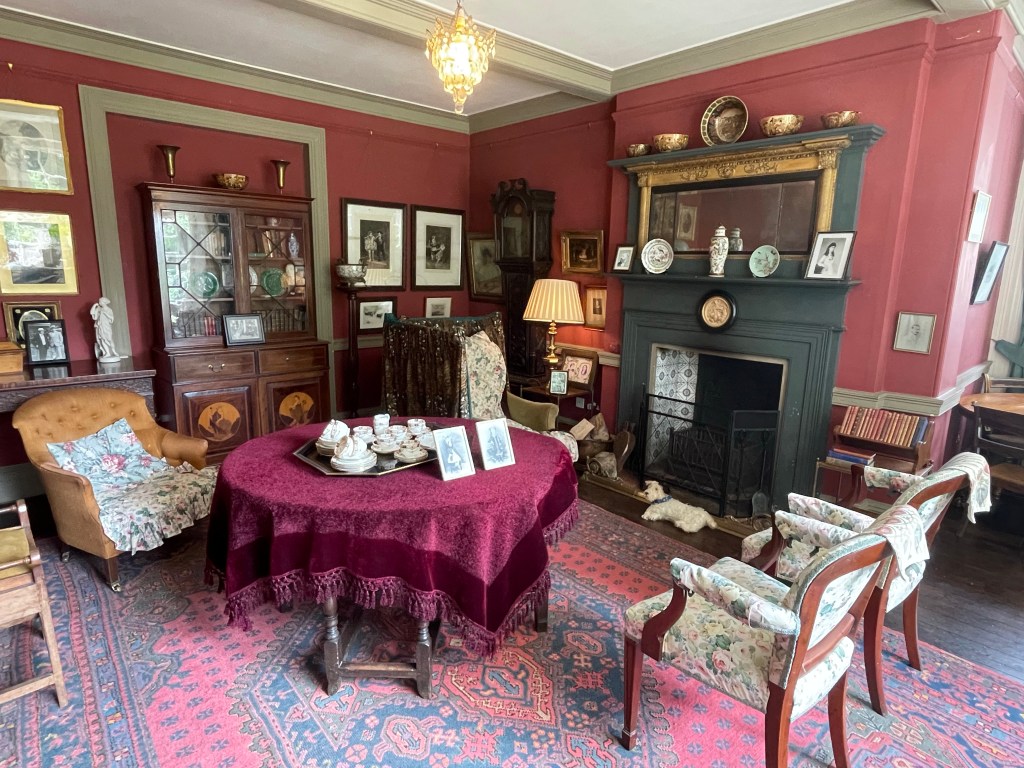
Hardy soon began hosting other celebrities of his day, including T.E. Lawrence who lived a short motorbike journey away, and the Prince of Wales who would later become the abdicated King Edward VIII. Naturally, the modest house he had originally designed was no longer grand enough, and so he extended the dining room, spare room, built himself a fancy new office, and large servant areas including kitchen, pantry etc on the back of the house.
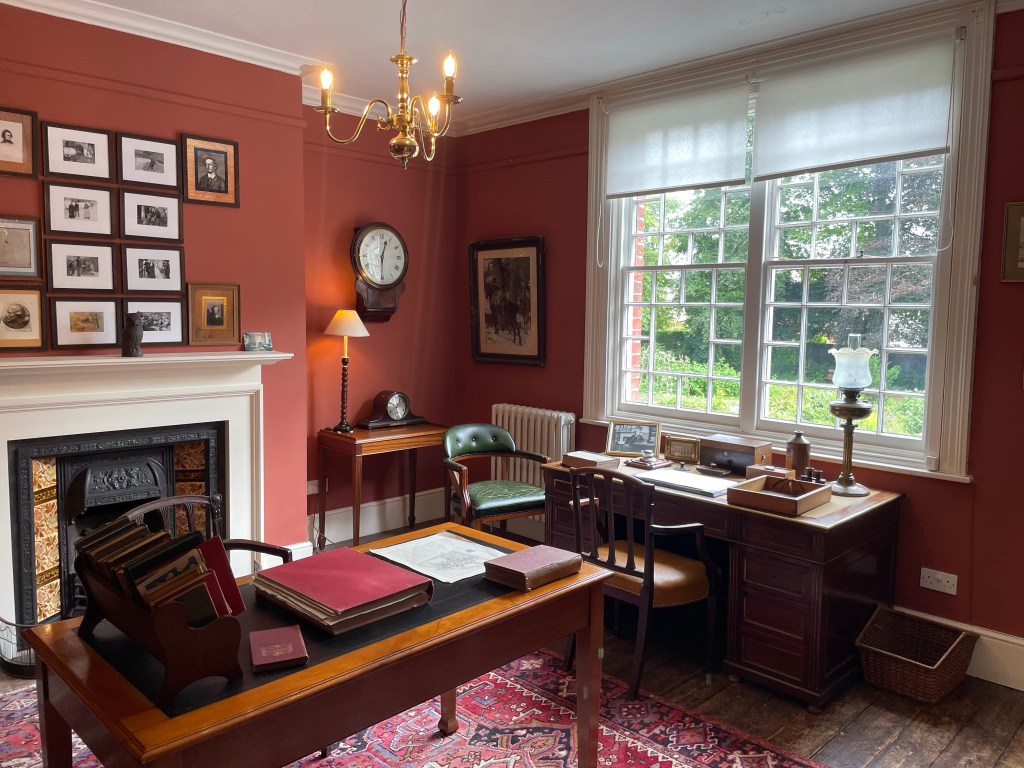
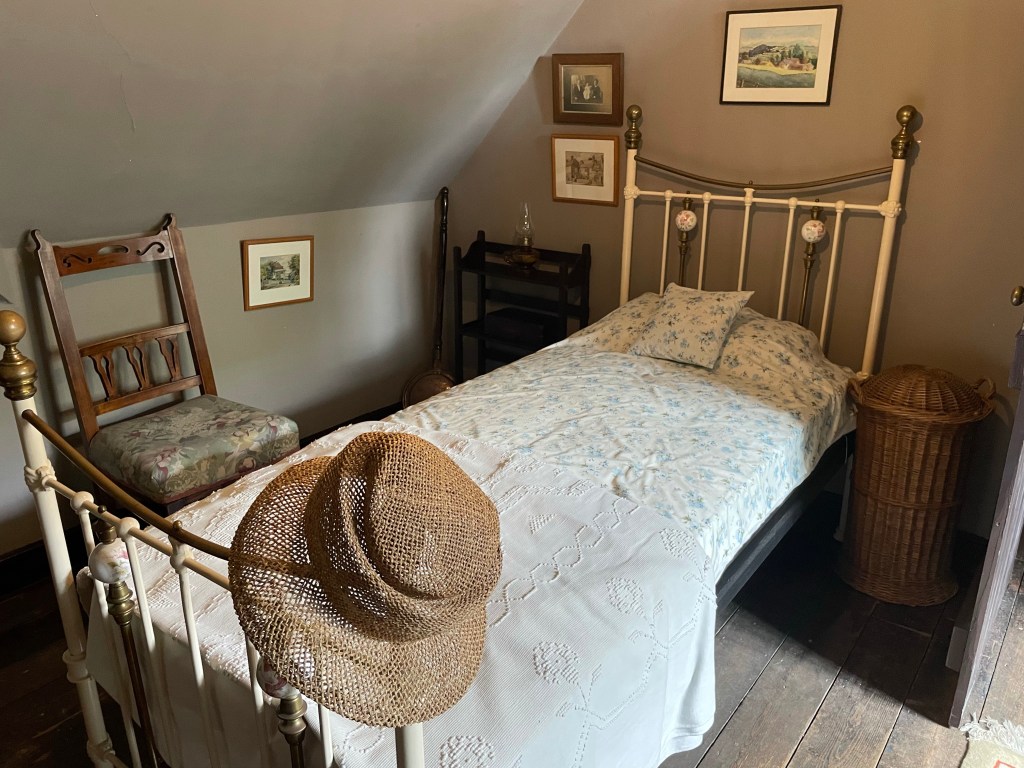
It was at this point that Emma asked for her own space – she and Hardy were no longer getting on well. So he extended into the attic up a neck-breakingly steep staircase to create a bedroom and dressing room for his wife to hide away in – which I actually thought were rather lovely and I could happily have lived and written up there too.
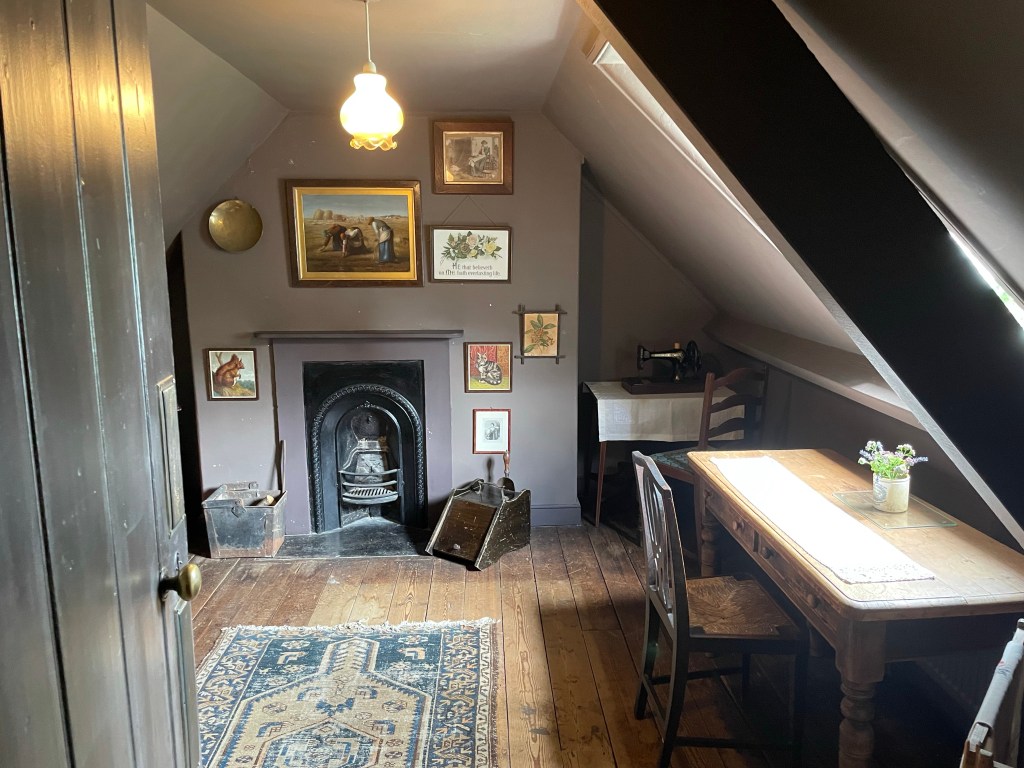
It was during this time that superfan Florence Dugdale, a teacher, sought out Hardy via letter and struck up a friendship both with him, and with Emma. It appears Hardy was smitten with Florence, and she him, but Emma tolerated this until her death in her attic room in 1912 aged 72.
Less than two years after Emma’s death, Hardy married his (now secretary) Florence – 39 years his junior.
However, Hardy was wracked with guilt for the way he had treated his first wife, and continued writing love poetry to her. On his death in 1928 at 87, his wishes were to be buried with Emma. Unfortunately his executor disagreed and wanted him buried at in Westminster Abbey as befitting a literary legend.
Bizarrely a compromise was struck – his heart was buried with his wife Emma, and his ashes were interred in Poet’s Corner.
Florence carried on living at Max Gate until she too died at the property in 1937 aged just 58. In yet another weird turn of events, she was laid to rest in the same plot as Hardy’s heart and his first wife Emma – third wheeling even in death.
As Thomas Hardy didn’t have any children, the house and everything in it was sold off after Florence’s death.
Thankfully, Hardy’s only remaining sibling, Kate, stepped in and bought the house, recognising it as a piece of history. She left it to the National Trust, along with a chunk of money which enabled the charity to also purchase Hardy’s Cottage.
While it sounds like a tumultuous place to have lived for all three residents, Max Gate was such a gorgeous and peaceful place to wander around. I was also incredibly lucky to have a 1:1 tour with a very knowledgeable volunteer – Diane – who willingly shared her knowledge and really brought the place to life.

Verdict: Gorgeous and peaceful home with a cracking sunroom, but doesn’t sound like it was as much fun for the residents caught in a messy love affair.
 A Year of Trust