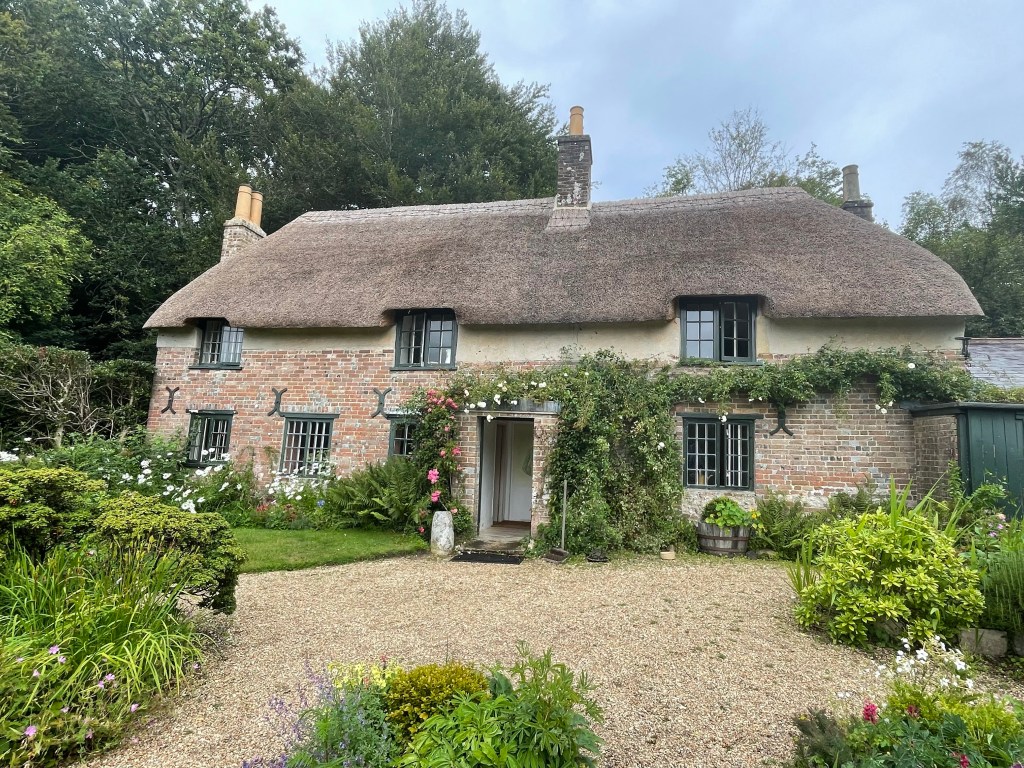
I was beginning to wonder if I was lost or about to be murdered (or both) as I wandered through woodland from the car park in the general direction of Hardy’s Cottage. There wasn’t a soul around, and it was deathly silent save the heavy raindrops on the leaves above me.
This ancient forest which had been Hardy’s playground throughout his childhood must have been creepy at night, and probably explains some of the darker parts of his literary works – even though he often said his time living at the cottage was his happiest.

Thankfully, after about 10 minutes a beautiful thatched cottage appeared below me, and the meandering path began a descent.
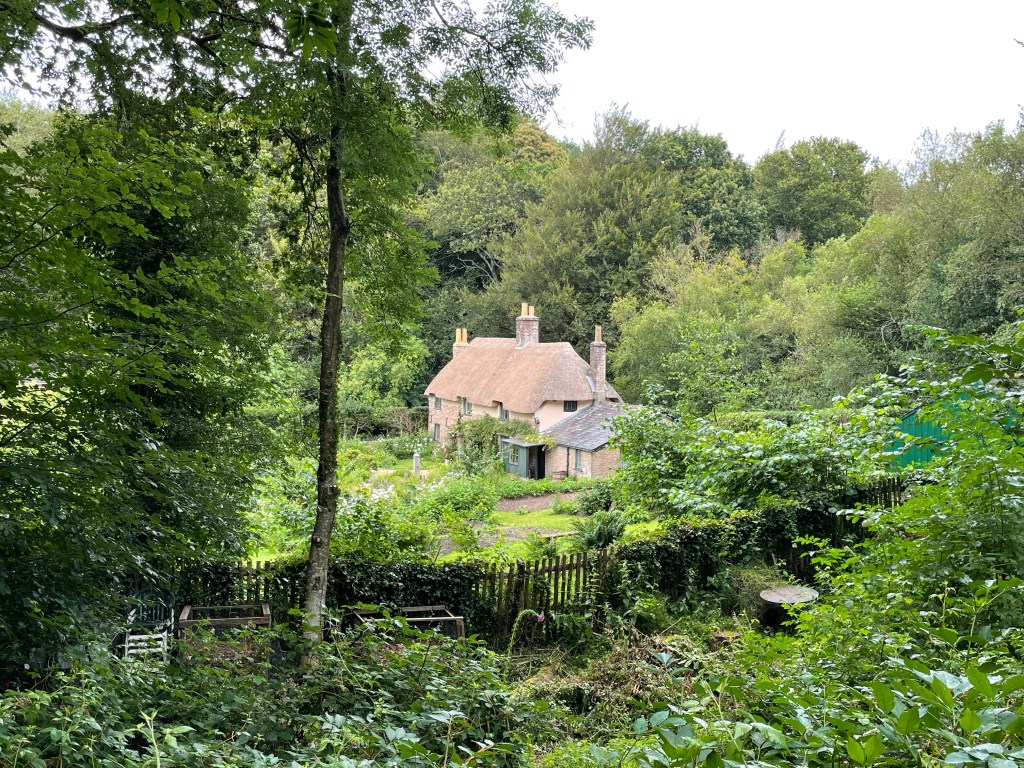
The cottage was where Hardy was born, grew up, wrote his first poem and several of his novels including Far From The Madding Crowd, and was his home until around 30 years old when he defied his mother and got married.
In true fashion, as part of my Hardy-themed-National-Trusting day, I had in fact just come from Max Gate, his home for the majority of the second half of his life and where he and both his wives died, so I had a good grip on his timeline.
Anyway, having survived the walk (trainers or walking boots recommended – I was not prepared), I joined the guided tour of the property by a sweet NT volunteer. Sheltering from the gentle summer rain in the woodshed, she explained how it was Hardy’s mother Jemima who had been the driving force of the family and without whom we may never have had the literary Thomas Hardy we know and love tolerate.
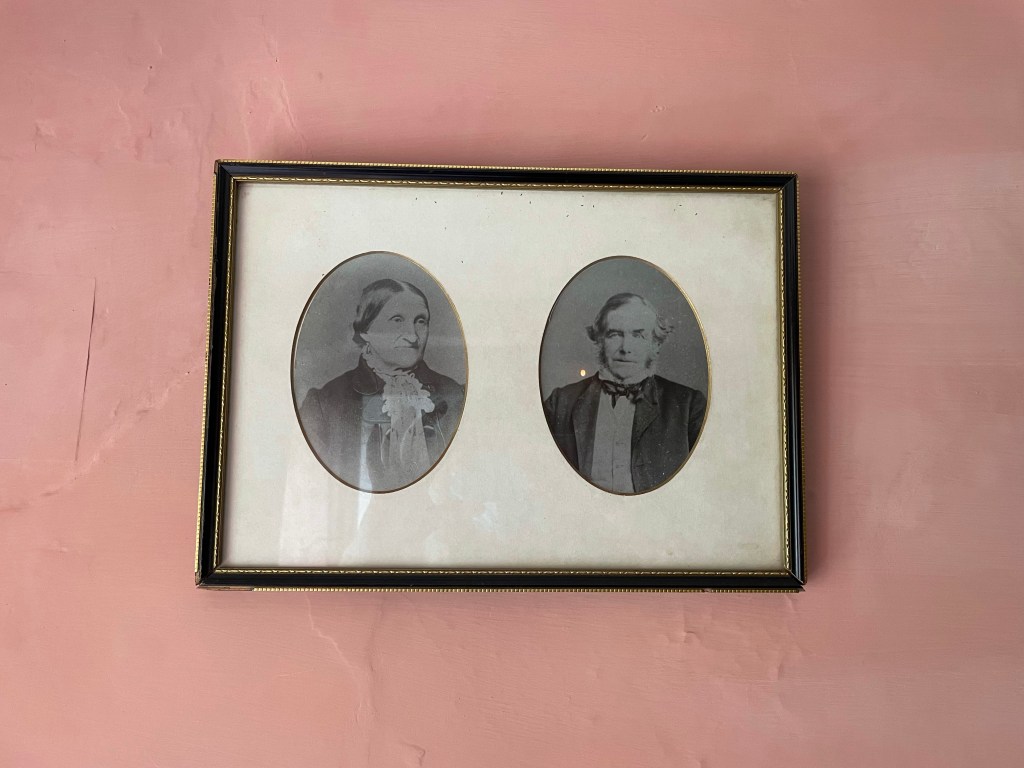
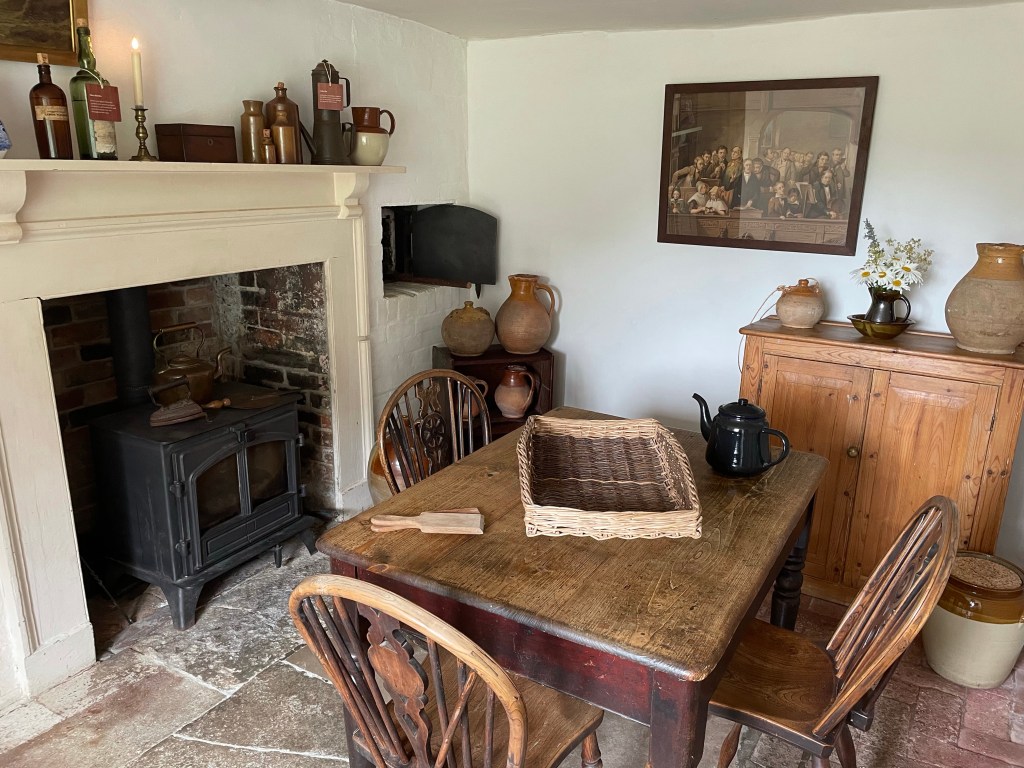
Jemima certainly looks a stern woman from the photo on the wall in the family room – on a wall painted pink with a mix of white paint and pig’s blood (try asking for that in B&Q) – but then she had to be.
Born to a drunk of a father and a servant mother, any thoughts she may have had of greater things were quashed when she was sent away at 13 years old to work as a servant girl. Jemima eventually met and married Thomas Hardy senior, had four children all born in the cottage, and set her sights on ensuring her family wanted for nothing, her children were educated and financially independent, and that they never married but instead lived together and supported each other.
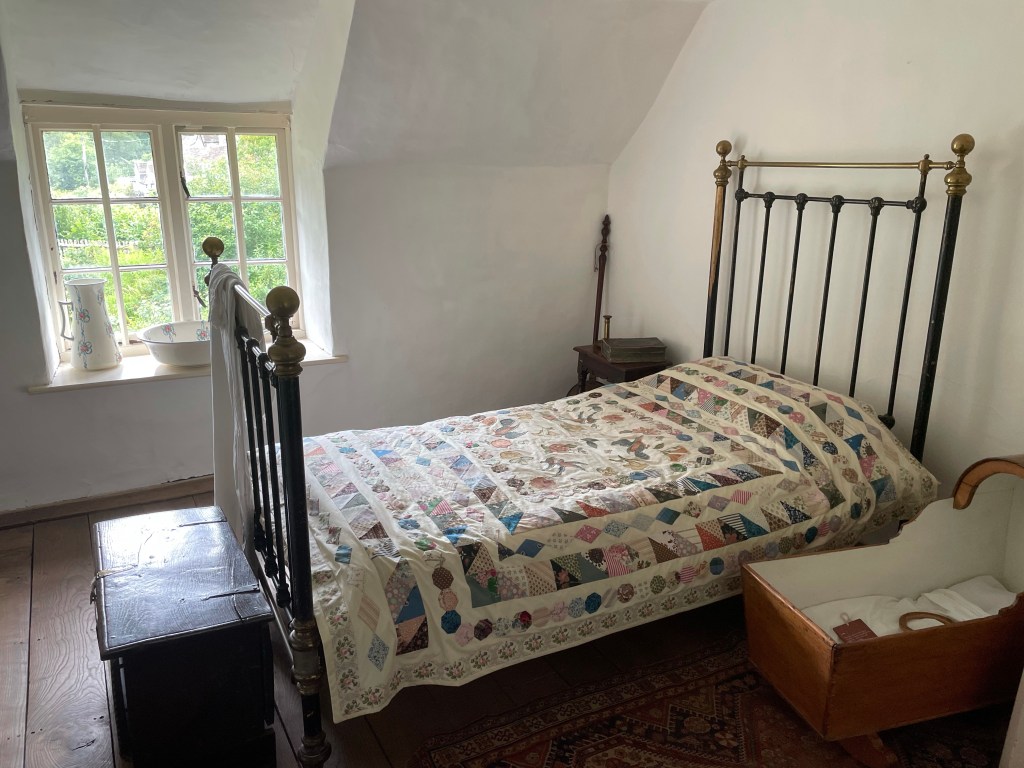
Interestingly, she also subverted tradition which would have seen her eldest son Thomas follow in his father’s footsteps and take on the family’s building firm, and instead gave that task to her younger son. This freed Thomas up to become an architect and avid writer – and so undoubtedly contributed to the literary fame he later experienced.
Jemima was therefore furious when Thomas was her only child to ignore her wishes and married a vicar’s daughter – she refused to attend the wedding – and moved first to London and then to Max Gate down the road.
Jemima lived to the grand age of 91, and got to see her two daughters Mary and Kate become successful teachers (Mary a headteacher), her younger son a successful builder and businessman, and her eldest son a literary icon.
 A Year of Trust