
Today was a big day for the AYOT blog – I made it to Sutton Hoo after about five years of trying.
On all other occasions it has been shut, or being renovated, or COVID has got in the way, or we’ve just not made it. Until today. The excitement was palpable.
Most people have heard of Sutton Hoo, but for those who haven’t, it’s is the site of some hugely important archaeological discoveries – two medieval cemeteries, one including an untouched ship burial packed with Anglo-Saxon artefacts. These all date back to around 500-600 AD, and so help to fill in some of the gaps left by early writings and legends.
As it’s currently understood, the brief history of Sutton Hoo is that when the Roman empire fell and the Romans left Britain in 410, Germanic peoples from Scandanavia, Germany and the Netherlands seized the opportunity to settle here. This group of people were known as the Anglo-Saxons and Britain was split up into lots of kingdoms.
Here in East Anglia, people were buried under burial mounds – which is what the landowner of Sutton Hoo discovered the little hills across her property to be.
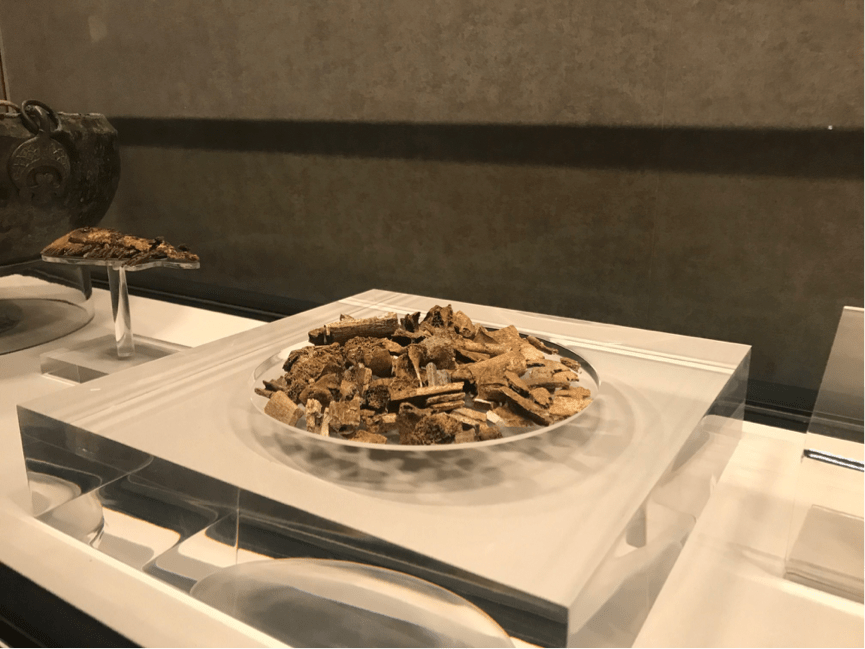
But under the biggest mound, the greatest discovery was made – a king buried in a medieval ship, and it was mostly still intact.
It is believed that it was Raedwald, King of East Anglia, who was buried in this grand ship, along with lots of precious items to help him in the afterlife, such as jewellery, his sword and shield, and his helmet.
What is remarkable is that these have all survived (I use this term lightly, they are all very crumbly) the 1500 years underground, and escaped the ransacking that many other burial grounds have sadly experienced.

The discoveries were made in 1938-39, on the cusp of the Second World War, of course thanks to a woman.
Edith Pretty owned Sutton Hoo and had asked a local self-taught archaeologist Basil Brown (they all sound like characters out of a Miss Marple murder mystery) to investigate the mounds across one of her fields.
We all know I’m a sucker for a story about a strong independent woman, so I must add a sidenote here about Edith Pretty – not only was she responsible for one of the greatest archeological discoveries ever made, but she was also one of the country’s first female magistrates, and volunteered with the Red Cross during World War I in France.
Of course, as soon as Pretty and Brown realised what they had discovered and within weeks, a national team of archaeologists took over the dig which continued in fits and starts due to the war.
In the late 1960s, the difficult decision was taken to take a plaster cast of the impression of the ship, but this meant the original impression would be destroyed. Therefore, the ship itself no longer exists, but the replica as you arrive at Sutton Hoo helps to give an idea of the scale, and that replica is thanks to the plaster cast.
Verdict: One of the most important sites of British history, but one which now relies on ghosts and imagination to tell the story of our past.
Post COVID access: You must book a time slot to visit Sutton Hoo through the National Trust website. It’s still free for members, or £8 per adult.
 A Year of Trust