Understatement of the century: 2020 is not remotely going to plan. And one of the more insignificant inconveniences that comes with a global pandemic is that most of the National Trust sites have been closed for the last 4 months, somewhat buggering up my plans to surpass last year’s total of 30 properties.
Nevertheless, National Trust site number 4 of this colossal mess of a year was Eggardon Hill Fort, where I and my Labrador could dutifully practice social distancing.
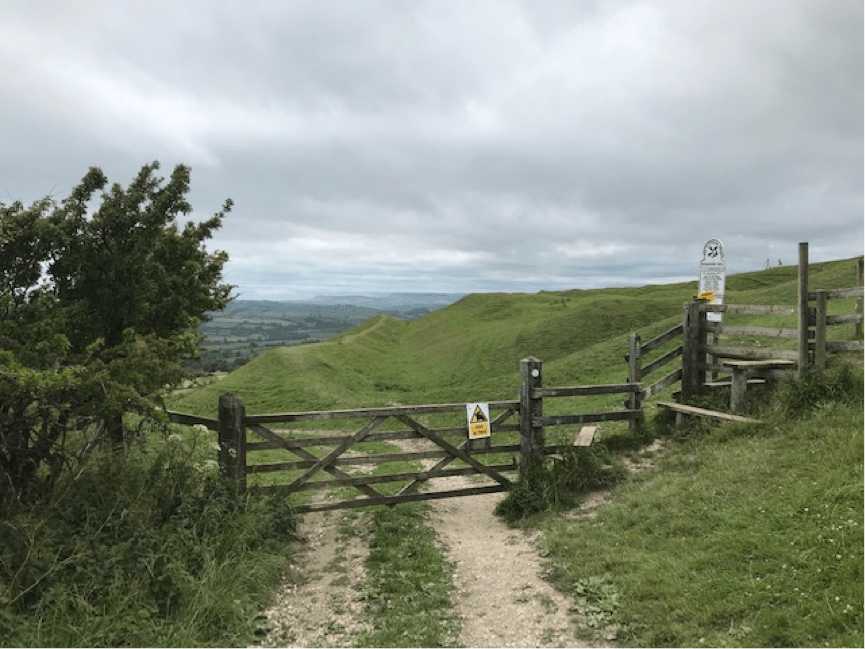
Abandoning my car in a layby, the views across the Jurassic Coast and the English Channel were spectacular before we got anywhere near the ancient site itself. Then over a couple of stiles and along a dirt path, we emerged at the undulating hill fort, beautifully preserved.
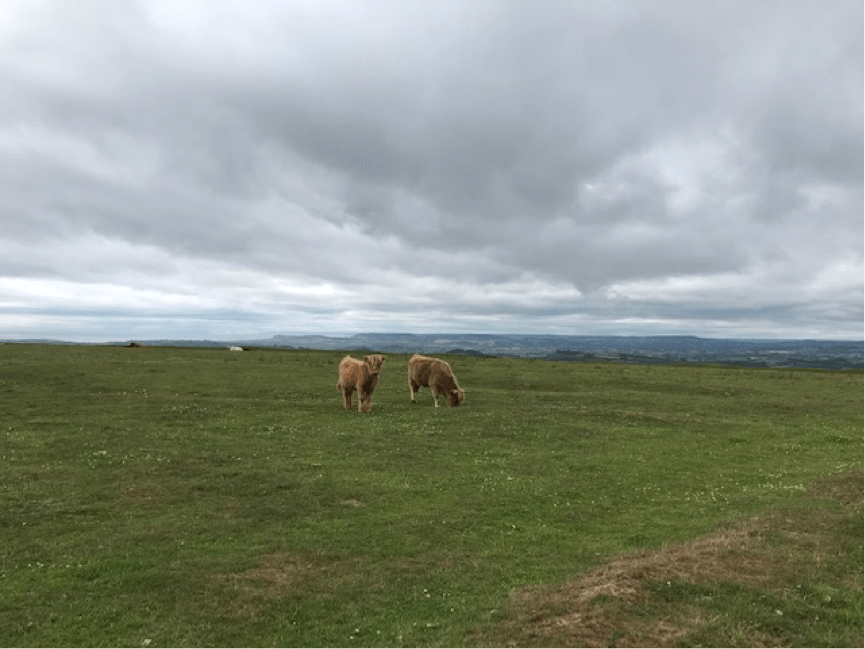
Heeding the warning of bulls in the field, we admired the hill fort from the other side of the electric fence, watched by the beady eyes of said bulls, cows and their calves.
Hill forts are simply a defence mechanism dating back to the Bronze and Iron ages – Eggardon Hill is believed to be around 2,500 years old. Settlers would use the hill to their advantage, adding ditches and mounds to make it harder for anyone to approach the summit without being spotted.

There is no doubt that lockdown has been horrendous for many people, but sometimes there are glimmers of good too, and I was honoured to witness one of these while visiting Eggardon.
A dad and his two children arrived with handmade cardboard spears and axes, ready for a home-school history lesson. Positioning the kids at the top of the hill, this creative parent ran all the way down to the bottom of the hill fort, before slowly trying to creep up to the top without being seen.
Delighted shouts from the two children rang out each time they spotted their father, and a spear or two thrown in his direction, and the interactive History lesson was complete.

 A Year of Trust