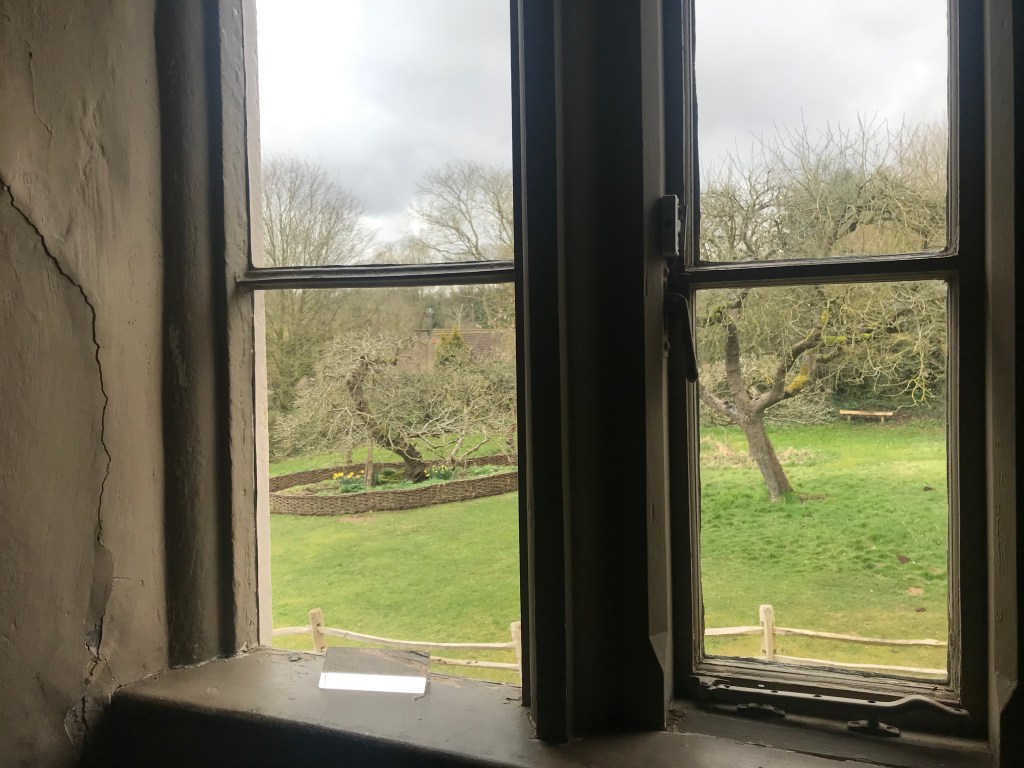
Everyone knows the story – Isaac Newton was sat in his garden, under an apple tree, when a juicy one fell and bingo – he discovered gravity.
What most people don’t seem to know is that Isaac was actually a little terror of a child who drew on the kitchen walls, spent hours locked away in his bedroom, and was sent home from university because the plague had broken out.
And the very house where gravity was discovered and a prism was first used to split light into its different wavelengths, is Woolsthorpe Manor and now owned by the National Trust.
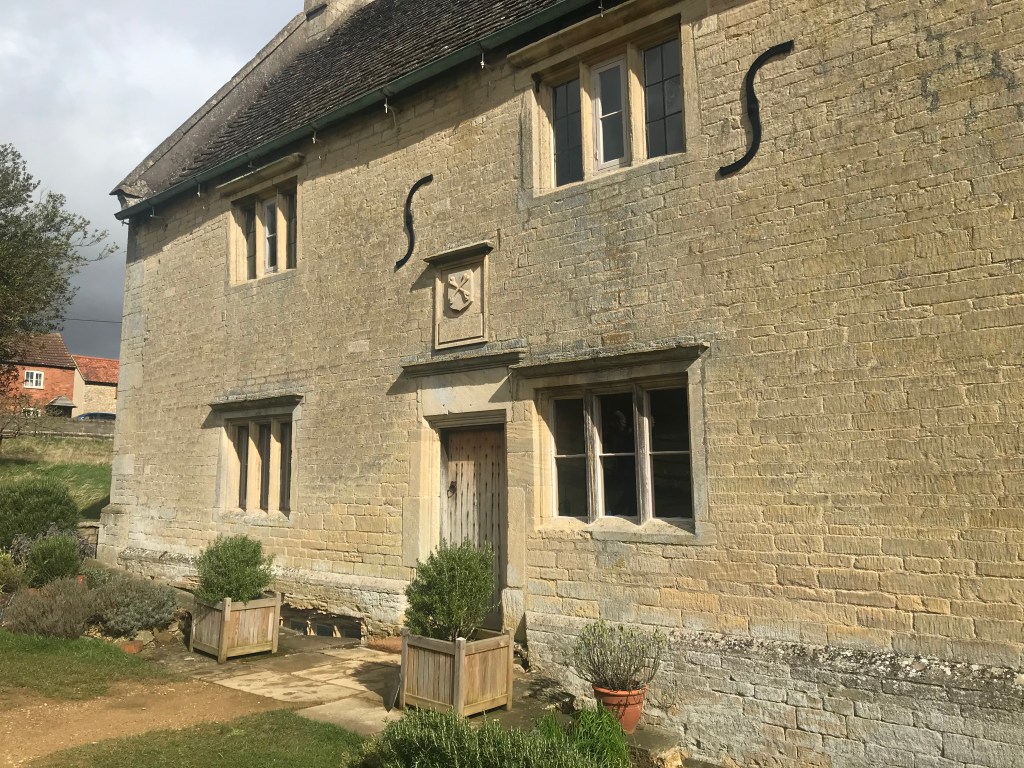
Isaac was actually born in one of the upstairs bedrooms of this house on Christmas Day 1642. His mother Hannah and father Isaac had been married in the April of that year, and heartbreakingly, Isaac senior had died in the October, meaning he never met his genius son, and a pregnant Hannah was left alone. Baby Isaac was born premature and sickly, but fought to survive his infant years and of course lead a remarkable life.
Isaac was actually meant to follow in the footsteps of his father and become a sheep farmer. Their home was busy with farm workers who often ate in the kitchen, and Isaac’s mother took him out of school to work on the farm and learn the trade.
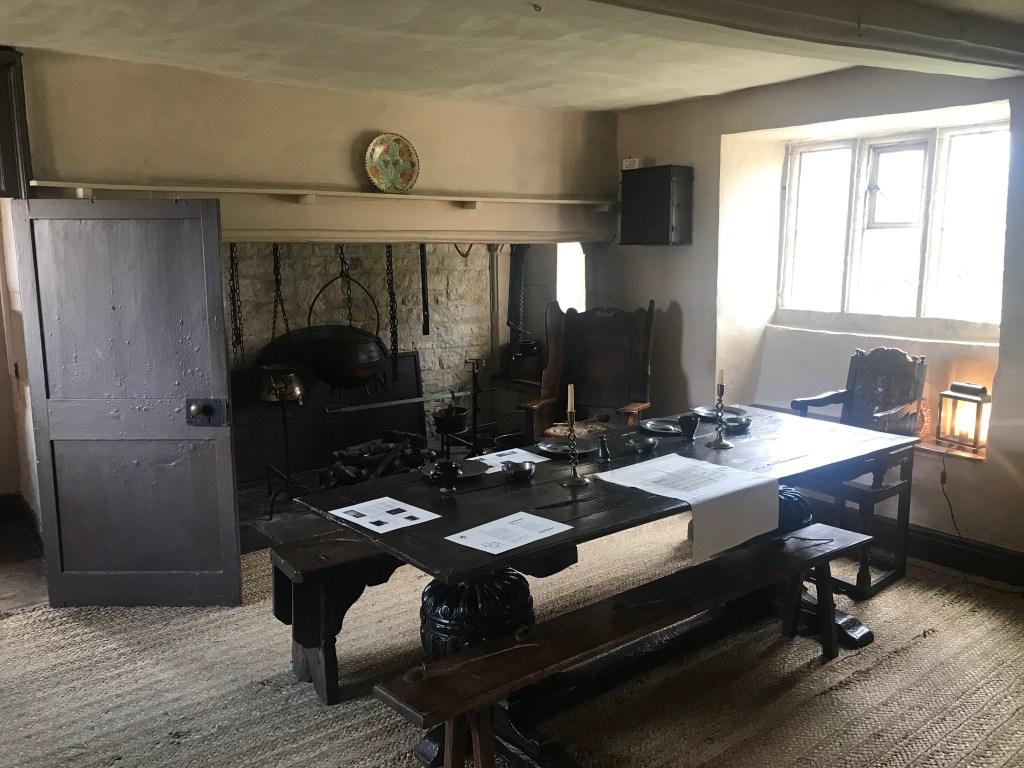
Instead, the curious child spent his time trying to make sense of the world around him, reading in the fields instead of tending to the sheep, making models powered by water or mice, and flying kites to understand the weather.
His exploration of the world was also often to the detriment of the walls of the house. Most children would be berated for carving and drawing on the walls, but then most children probably aren’t designing sundials in the window ledge or the pulley system of a mill in the kitchen wall. This focused obsession with engineering and his determination to understand it leads me to believe that Isaac was probably autistic.
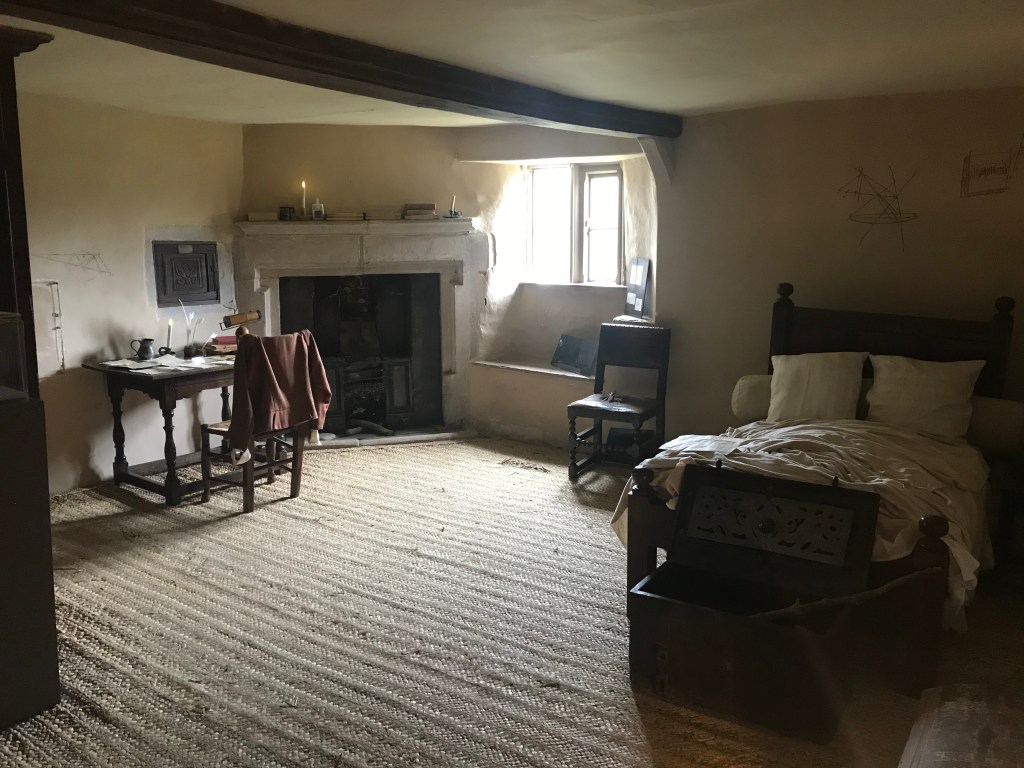
The whole of Woolsthorpe Manor has been beautifully curated so that it seems as though the family have stepped out just moments before, and no room more so than Isaac’s bedroom. His drawings are still on the wall where he mapped out the refraction of light, the bed looks like it’s been made by a teenage boy, and I love the fact that the window gives a clear view of the apple tree that changed science. The air in the room is heavy with invention and exploration in a way I genuinely cannot describe – but it actually is where the world of maths and physics was transformed.
Isaac studied at Cambridge University, but in 1665 after four years of study, the Black Plague was ripping through the country and all students were sent home, in stark similarity to the current COVID-19 pandemic which has seen universities shut and students returned to their hometowns.
This disruption didn’t seem to bother Isaac as he lived a solitary life at university, so having scraped through his degree (what a testament to the fact exams don’t prove a person’s intelligence), he shut himself in his room for 18 months to enable further study of maths and philosophy – where he discovered gravity and the splitting of light through a prism.
The room has been modified since Isaac lived there as a lad, because he had a large wooden cupboard/office built so he could lock his books away, but the National Trust have done a remarkable job of recreating the light experiments using a crack in a wooden panel and a glass prism. As usual, the volunteers were incredibly knowledgable and able to explain both the history of the room, and the science.
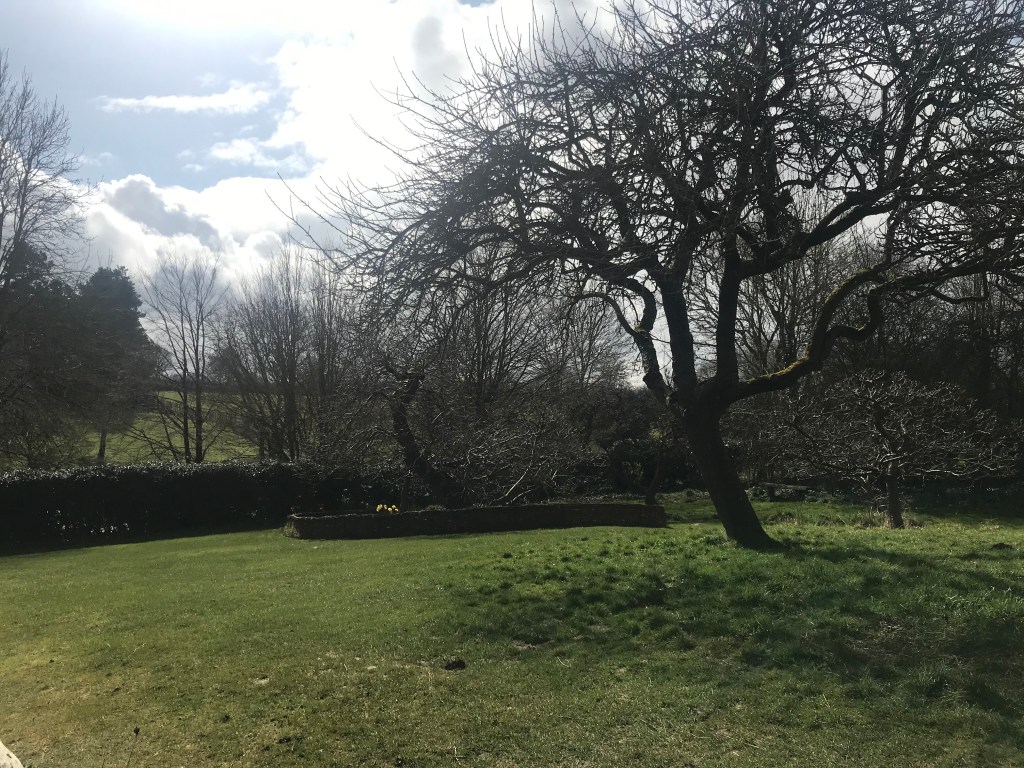
The famous apple tree itself is still in the orchard in front of the manor, protected by a woven fence. The rest of the grounds are simple as to be expected from a farm house, and sheep still roam the fields surrounding the house. The house has been hailed as a place of inspiration for the many years after Isaac’s departure, and it’s easy to see why.
The cafe in the courtyard also doubles as an activity centre with a range of science experiments suitable for all ages – it was a marvellous end to the visit, and the Victoria Sponge was excellent too.
Verdict: An incredible piece of history, and a place which still feels inspiring today.
 A Year of Trust