
This post begins with a confession – I actually visited Osterley Park and House back in April, I just never seemed to find the opportunity to write it up. So here we are in the final days of 2019, and I’m determined to make sure I begin the next decade with a clean slate.
Osterley Park is ostentatious, and since we’re being honest this evening, I thought was a bit Nazi-Germany palace-y, complete with Reichsadler eagles flanking the staircase up to the house. For a moment, it was as though the outcome of the Second World War had been altogether different, and this had been one of the regime headquarters.
And actually, there is probably good reason for this weird connection courtesy of my brain – Osterley was built to impress, to intimidate, to overwhelm – a bit like much of the architecture in a dictatorship. But thankfully that’s where the similarities end.
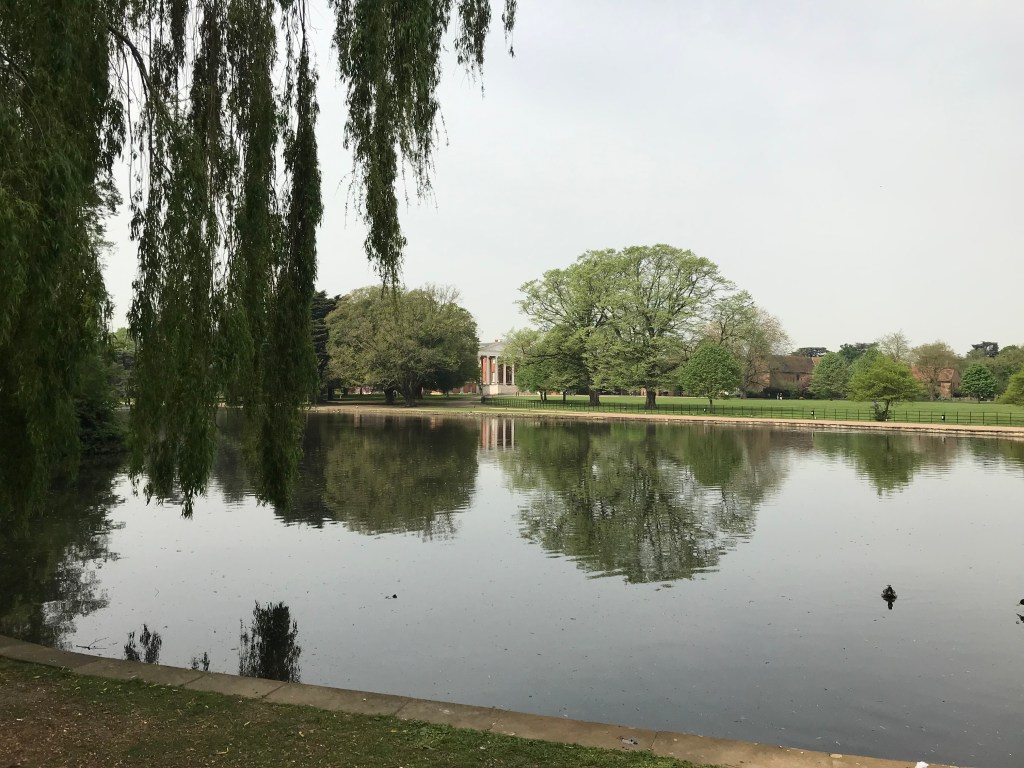
The grandeur of Osterley begins at the first glimpse of the place – just the pillars peeking out from between trees, all seen across a glassy lake. It’s impossible not to be impressed.
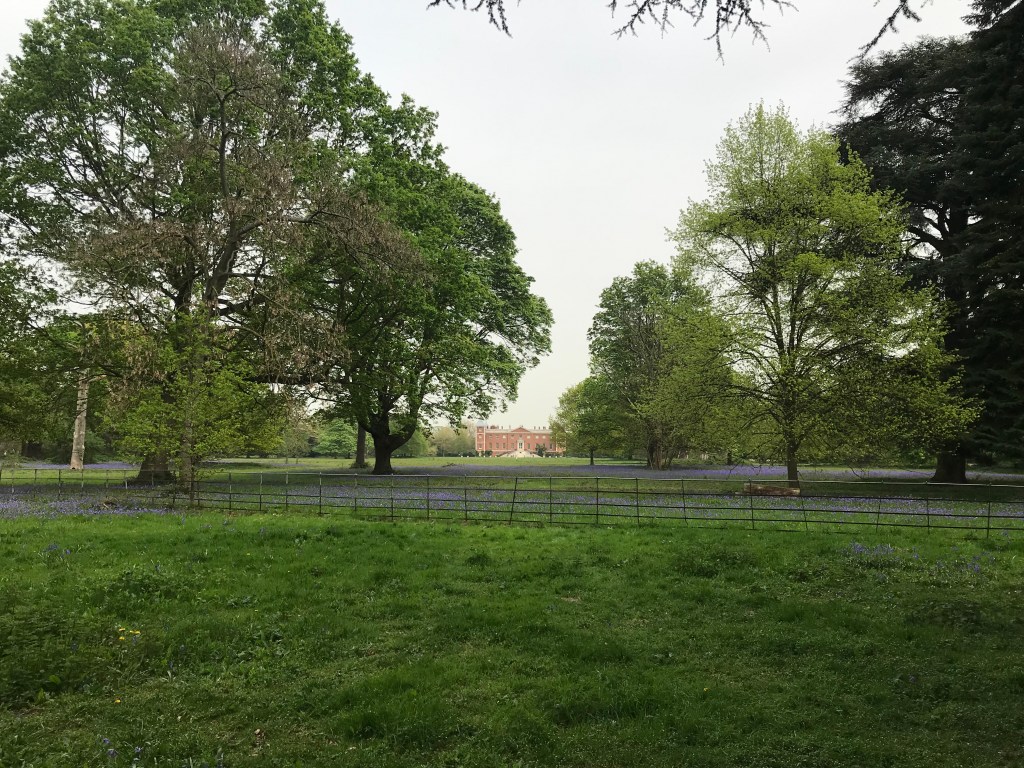
The park and gardens themselves are worth the trip, especially in late April when the woods are carpeted with bluebells, giving them an ethereal aura.
The loop walk around the gardens is the perfect length, and dens, rope swings and tree stumps to jump between are dotted along the route, keeping kids and those young-at-heart thoroughly entertained.
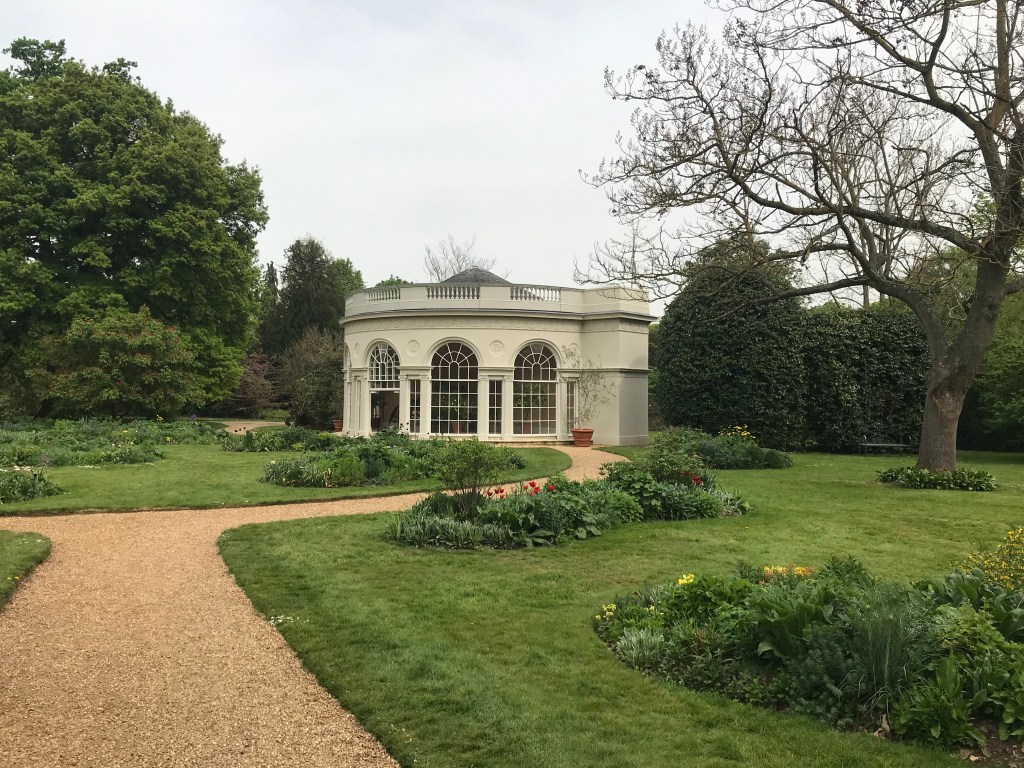
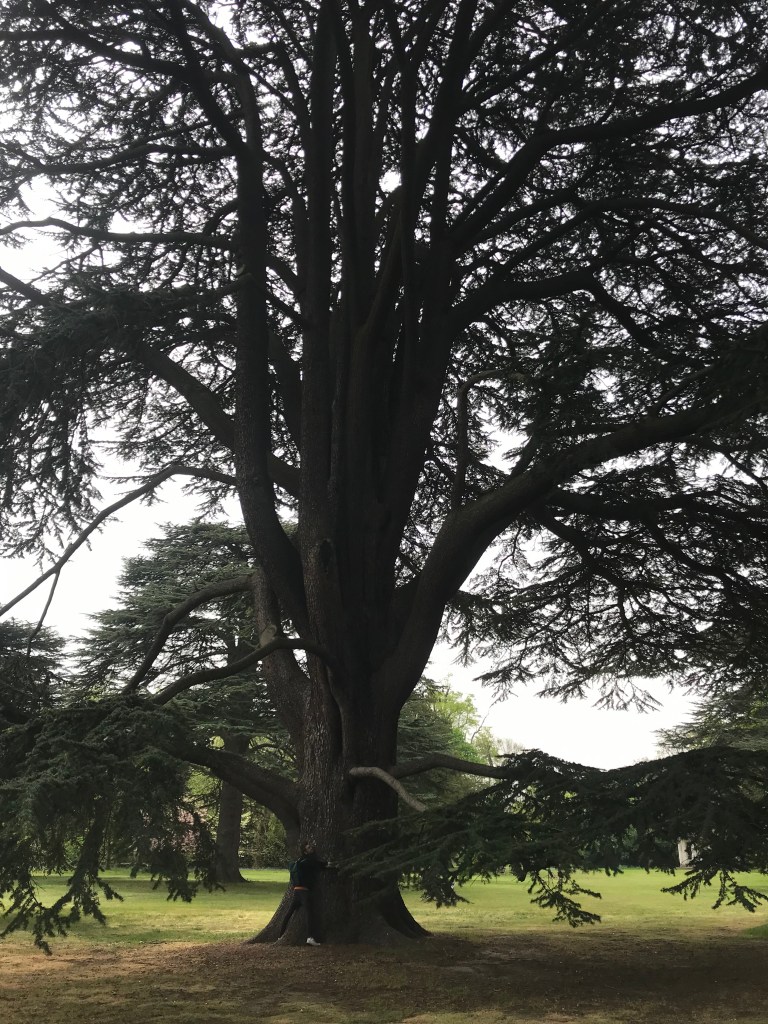
In the gardens was a suitably grand orangery (though it should have been called a lemonery with all the lemon trees in there), flowerbeds blooming with brightly coloured flowers, and a large grass lawn scattered with deck chairs for visitors to lounge in. Plus there are some absolutely enormous ancient trees in the gardens, which dwarfed my companion out exploring Osterley with me.
But my favourite find in the gardens was a little Grecian summer house, complete with four of its own pillars. Almost an Osterley house in miniature.
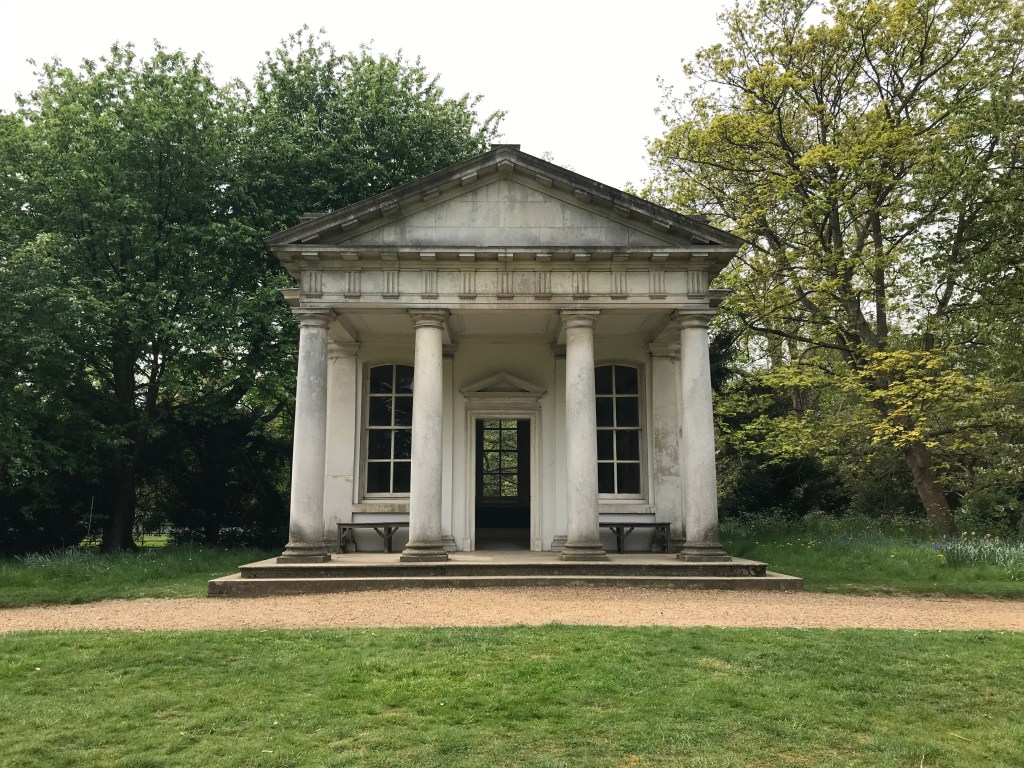
The spot would have been the perfect writing venue – light inside thanks to the large windows, cool even on a hot day due to the stone, and with beautiful views across the river of bluebells weaving its way between the trees. A woman can dream.
Given the splendour of the exterior of Osterley, and the lavishness of the minor buildings in the rest of the park, a pretentious interior of the main house was inevitable.
It looked like King Midas had hired the same architect who had designed Caesar’s Palace in Las Vegas for the hallway, and then the interior designer for Buckingham Palace for the rest of it. It was ludicrous.
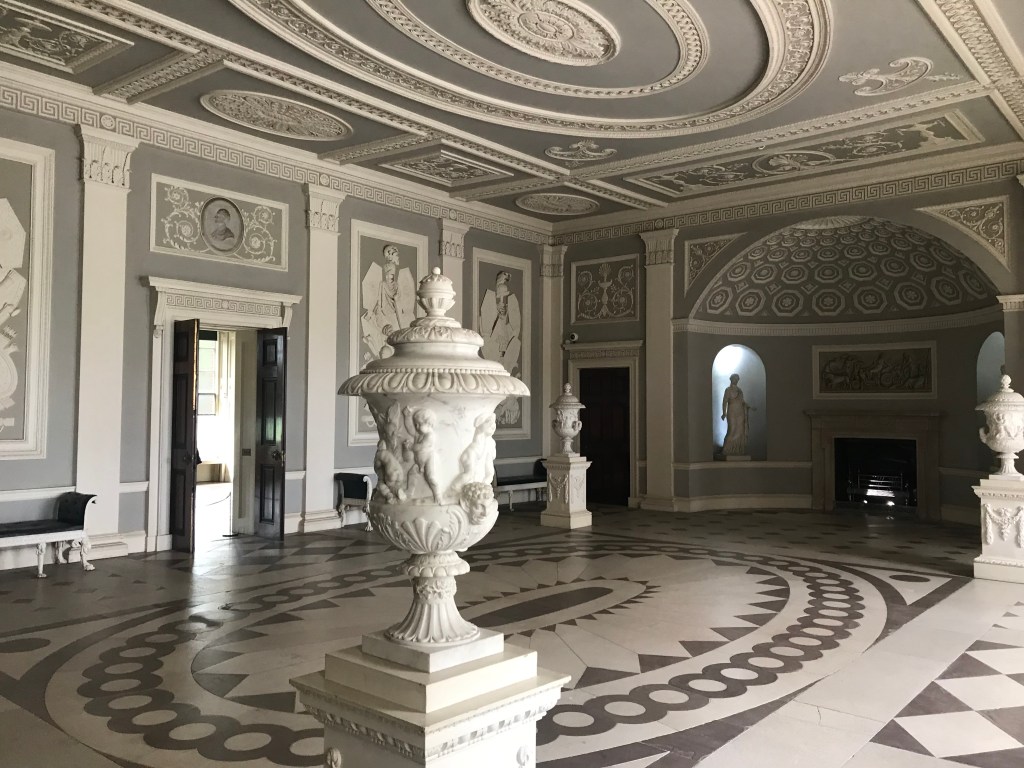
The actual masterminds behind this flamboyant mishmash of eras was, as is often the case, a collection of aristocrats who had each wanted to stamp their own mark on the place.
Originally, Osterley House was built as a manor house in the Elizabethan era by one of Britain’s wealthiest men – Sir Thomas Gresham. You may not have heard of him, but he was basically the accountant for three monarchs (Edward VI, Mary I and Elizabeth I) and he set up the Royal Exchange in London. He was so minted that Osterley was actually his second manor house, because one just wasn’t enough.
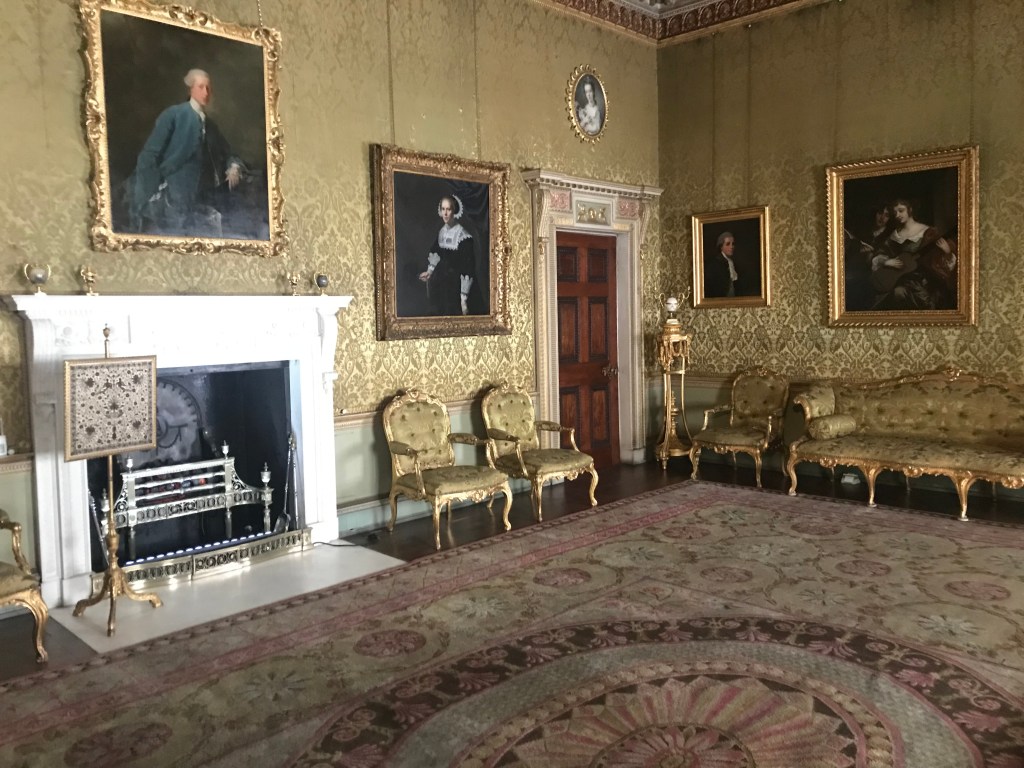
Then the house passed to Sir Francis Child (as in the founder of Child’s bank, so another bloke with too much money and a determination to show off) and that’s when the real bling began. Cue the Grecian entrance room, the official state rooms to welcome important guests, including the state bedroom which had an EIGHT poster bed. EIGHT. Presumably a four poster bed just didn’t scream ‘we have money’ enough.

Finally, after Child had died, the house had passed to his brother Robert, and there had been a family squabble about an elopement to Gretna Green, Osterley House ended up in the hands of a woman – Robert’s eldest granddaughter Sarah Sophia.
Still, this didn’t last long as having a vagina and boobs disqualified Sarah from owning the house when she married, and it passed to the Jersey family where it stayed until it was gifted to the National Trust in 1991 (a vintage year).
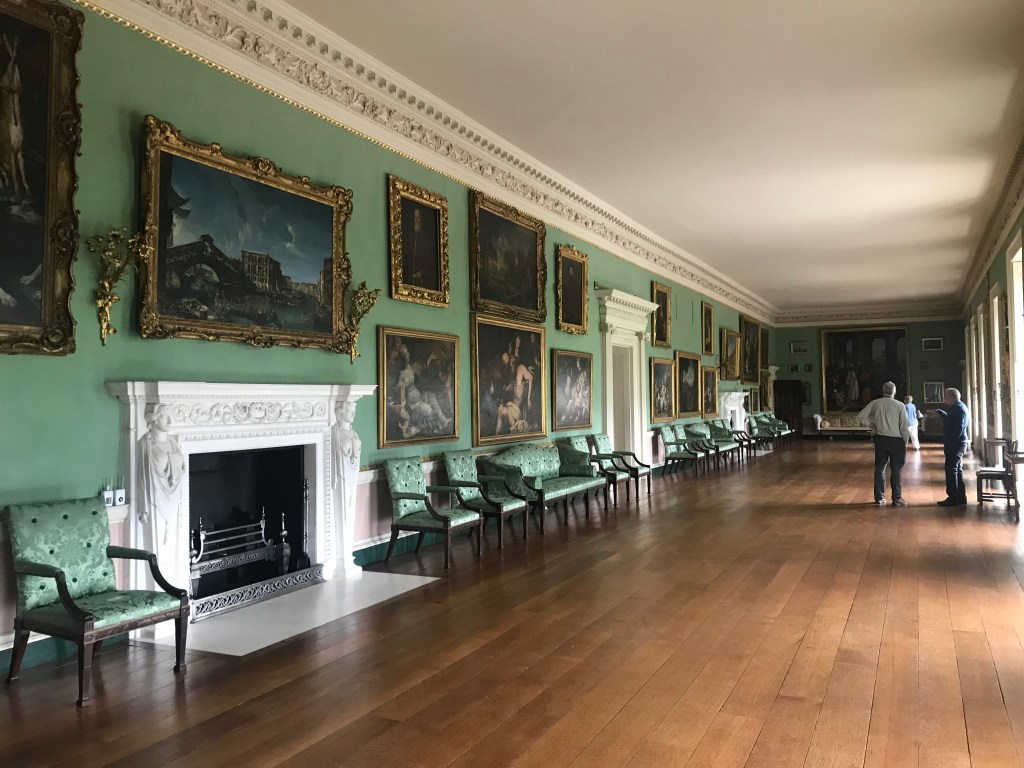
In its more recent history, Osterley was the site of the first Home Guard training school where they taught camouflage, knife-fighting, hand-to-hand combat, and how to mix homemade explosives, so they were ready to take on those pesky Germans should they arrive. They didn’t.
It has also appeared in numerous films, including The Young Victoria and the Dark Knight Rises.

Verdict: Looks a bit German from the outside which is ironic given its Home Guard history, and the inside is ludicrous. But there is no denying it is impressive, and make sure you explore all the gardens.
 A Year of Trust