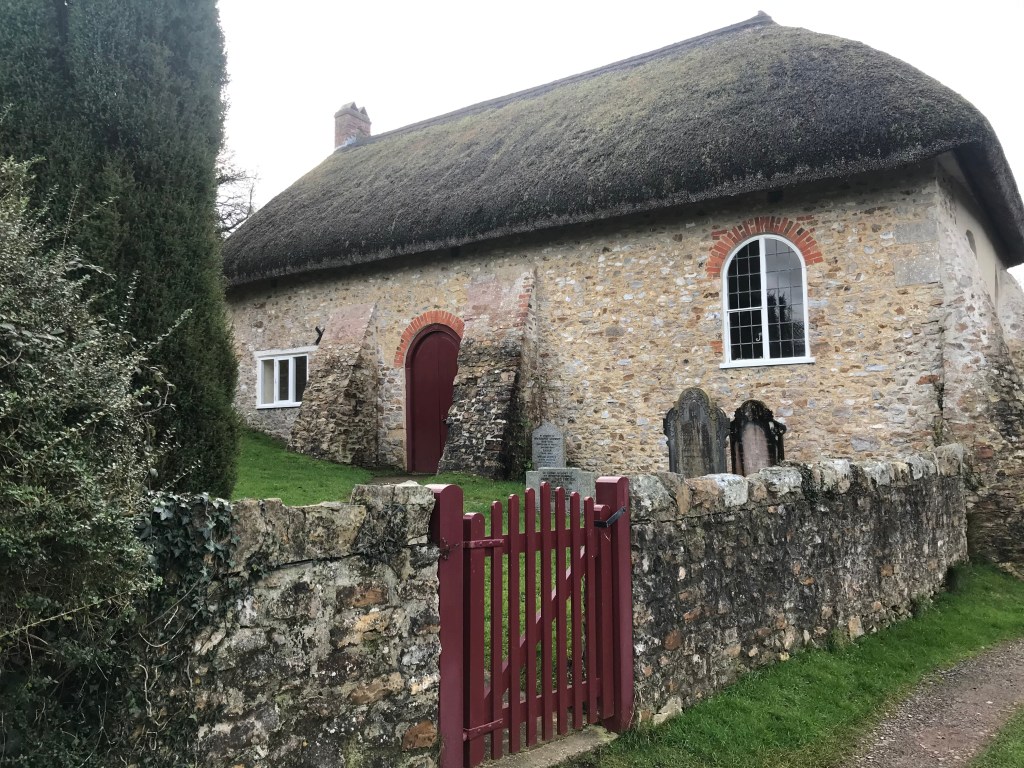
Nestled in the Blackdown Hills and on the county border is this little National Trust gem – a beautifully thatched building used as a Baptist meeting house for over 350 years.
Getting here was a bit exciting given all the rain Devon has had recently as the turn off is sharp, the hill is steep, and the track to the house is typically rural. But it was so peaceful and I was very glad to have found it.
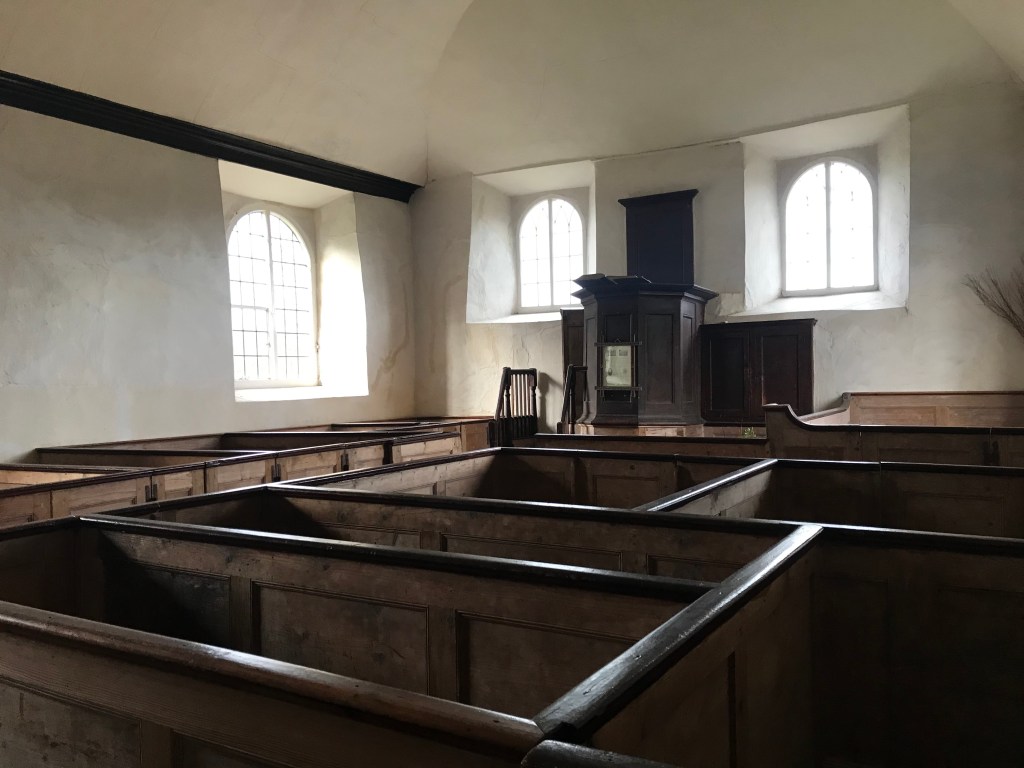
Inside, it looks just like a very plain and basic chapel, with hard wooden pews, a plain pulpit, and a balcony to cram in even more parishioners. To the rear of the building are two small rooms, each with a single chair and a small hearth, which were used to make lunch for the whole congregation for full-day services. Outside is a small stable used for the horses of those who had made a longer journey. And that is the sum total of the building.
But the simple construction belies the important history of the meeting house, a history which reminds us just how fortunate we are to be able to practice religion freely.
A chapel has been on this site since 1653 and this is one of the earliest surviving Baptist meeting houses. The house was actually illegal when it was built so it was a refuge to those Christians who had dissented from the Church of England and identified as Baptists.
The house was built into the hillside, surrounded by woodland and with narrow paths leading to it, all in an effort to conceal it. Furthermore, it was on the county border so the Baptists could flee if in danger. During meetings, guards would be stationed outside to alert the congregation if soldiers were spotted.
Those against the baptists sought to prevent them from practising their faith in the way they wanted. The framed information board at the front of the church explains how once the congregation arrived to find a huntsman stood on the pulpit blowing his horn, with his hounds sat in the pews. Who knows why it mattered so much to him the way others met to practice Christianity.
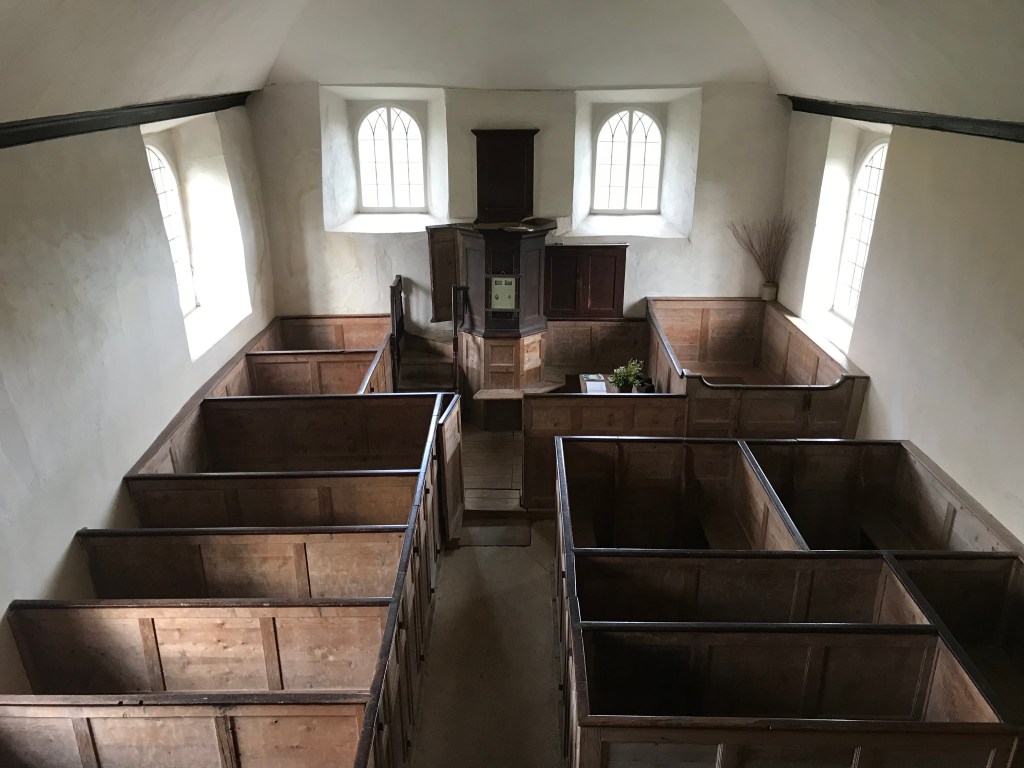
The meeting house was handed over to the National Trust in 1969, and baptists still meet in Loughwood House twice a year – so they won in the end.
Verdict: A tiny gem which tells the brave story of those determined to practice their faith.
 A Year of Trust