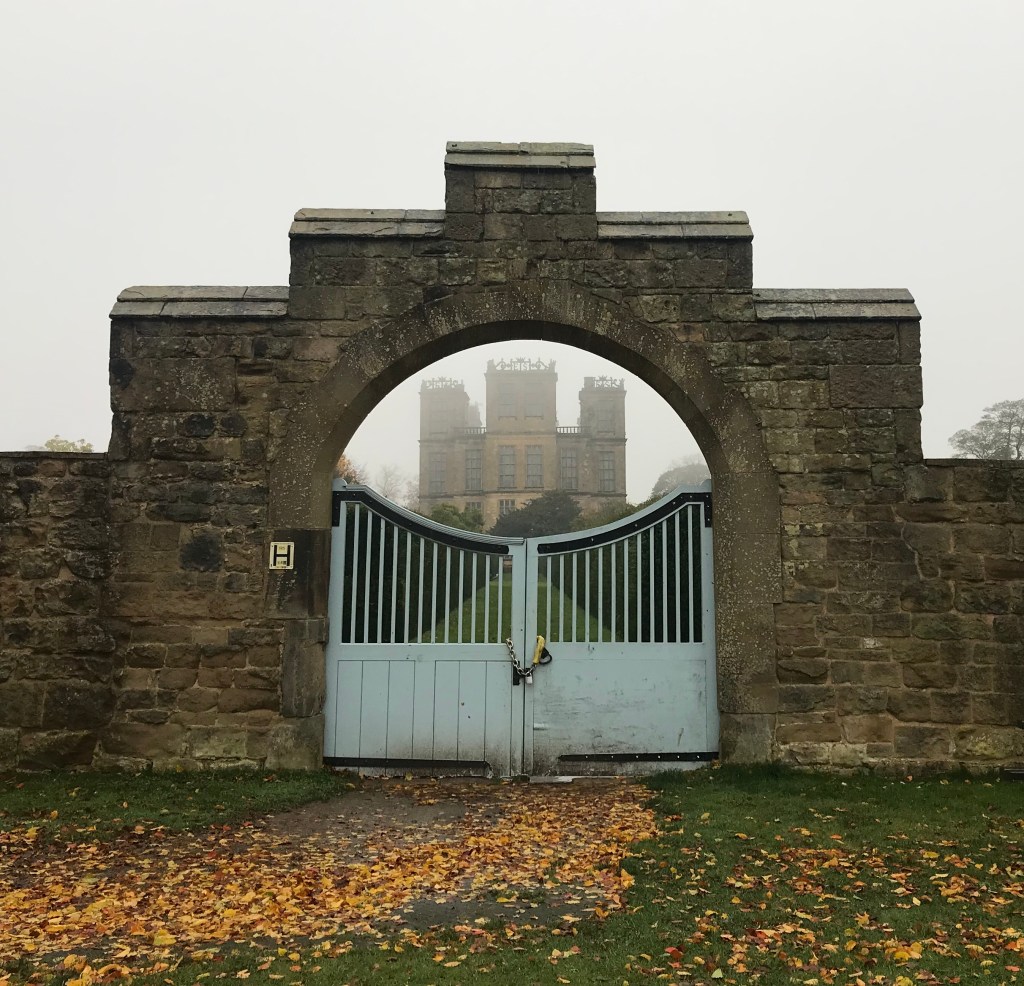
You’ll know by now that I’m a big fan of a strong, independent woman. Especially those women who fiercely scratch their name in the annals of history for their own achievements and character, not merely relegated to the status of ‘wife’ or ‘mistress’. And especially women with the good strong name Elizabeth.
Bess of Hardwick was one of these unicorns. A truly formidable woman, well connected, very savvy, and very clever. And as a result, very rich.
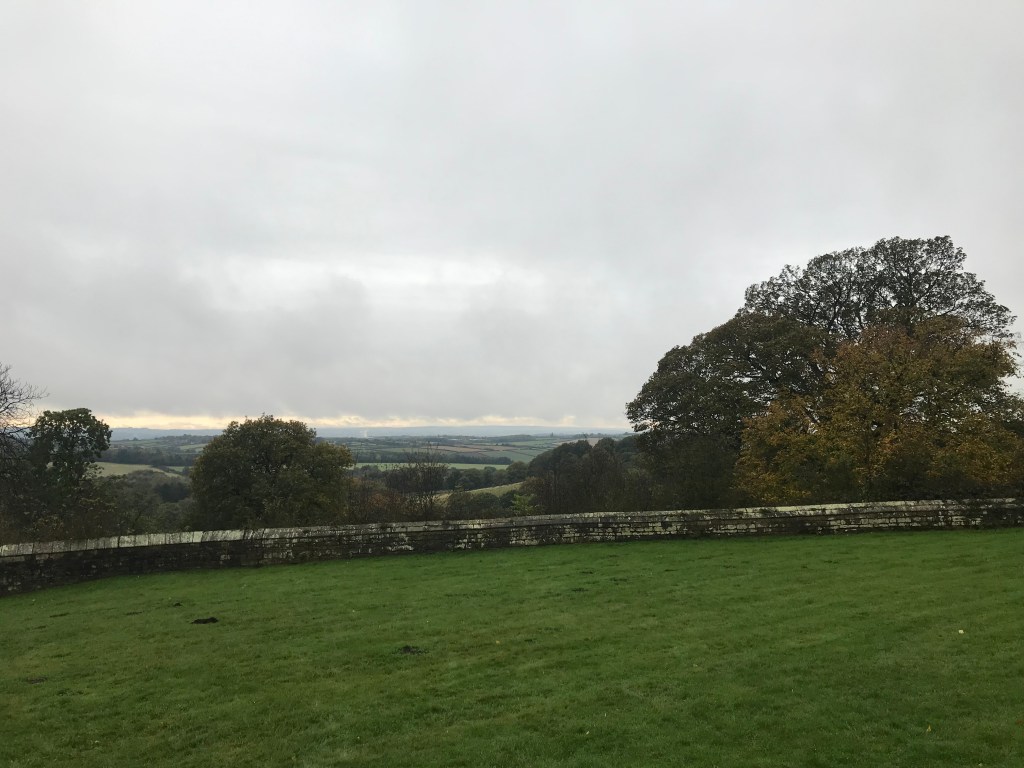
As I entered the Great Hall of Hardwick, I was just in time for an introductory talk, so joined other visitors at the vast wooden table in the cold stone room, to listen to the tale of Bess, told by Bess herself. The silver-haired actress dressed in full Tudor garb did an outstanding job of bringing Bess’s story to life, and I truly felt like I had been welcomed by her ghost.
Bess wasn’t born into poverty – her family lived in a huge house called Hardwick hall which stands in ruins next to ‘New Hardwick Hall’ – the building owned and maintained by the National Trust. More on that later.
Her age at her first marriage isn’t known, but her first husband Robert Barley was just 13 years old when they wed, and it’s believed she was a similar age. It was a marriage set up by their families as Robert was the heir to a nearby estate, but he inconveniently died on Christmas Eve just one year later aged 14. His family refused to pay Bess her claim on the estate, so she took them to court and won.
Meanwhile, Bess was swiftly moving on to husband number two – Sir William Cavendish. He was more than twice her age, and had already been widowed twice before, and they married at 2am at their friends’ house – presumably it seemed like a good idea at the time.
Nevertheless, the pair got to consummating their marriage, and Bess gave birth to eight of William’s children, although sadly two died before their first birthday. By now Bess was moving in some interesting circles, and so one of her children had Queen Elizabeth I as a godmother, and another child had Queen Mary I.
Sadly William Cavendish checked out just 10 years into their marriage, and left the family in great debt. So Bess cracked on with finding husband number three – another William, Sir William St Loe.
This William was very wealthy and a member of the royal court – Captain of the Guard to Queen Elizabeth I and Chief Butler of England. Of course, he didn’t last long either, and six years later he died in suspicious circumstances after several poisoning attempts by his estranged brother.
Unluckily for the gold-digging brother, it was Bess who inherited Sir William’s fortune. Still in her 30s, Lady of the Bedchamber to the Queen, and now one of the wealthiest women in England, Bess had become a very influential, and very eligible woman.
In 1568, Bess added ‘Countess of Shrewsbury’ to her many titles when she married her fourth and final husband George Talbot. Weirdly and incestously, two of her six children were married to two of his seven children in a creepy double ceremony. Especially concerning given that the two couples consisted of a 12-year-old girl and 16-year-old boy, and an 18-year-old boy and an eight-year-old girl.
More bizarrely, Bess and her new husband were in charge of keeping Mary Queen of Scots under house arrest, and Mary played the pair off against each other until their marriage collapsed. And then she was beheaded, so I guess that’s karma.
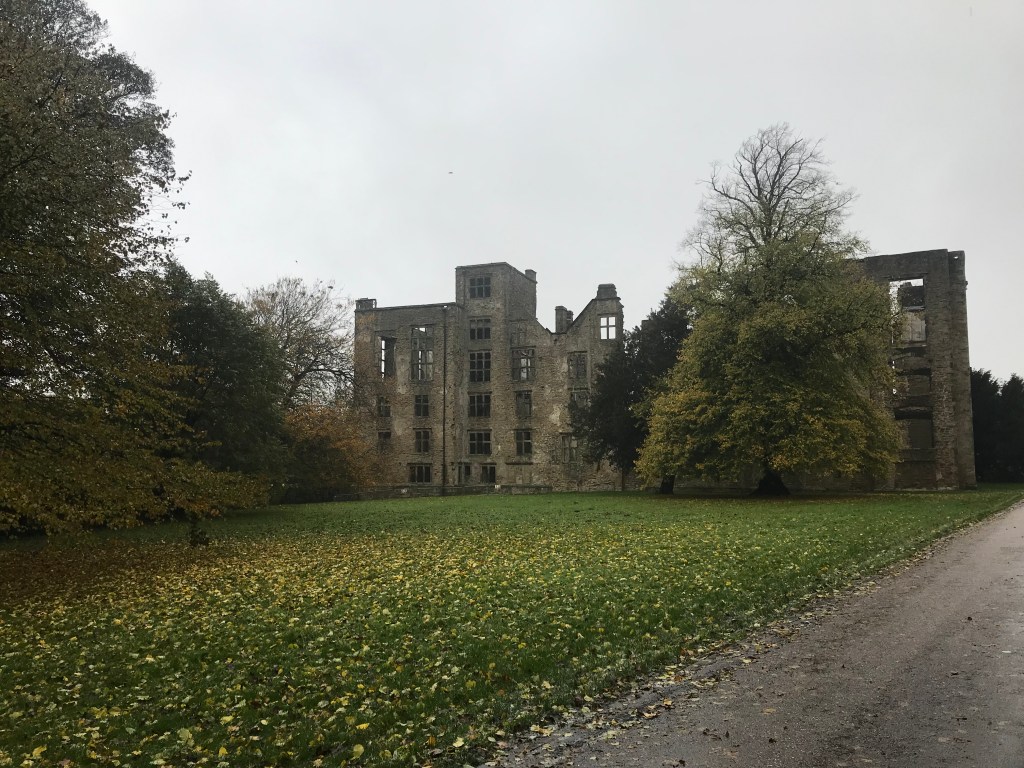
Husband numero quatro died in 1590, and actually it was only at this point that Bess built the new Hardwick Hall and let the old one go to ruin.
As the second richest woman in England – second only to the Queen herself – Bess went all out with designing her new mansion. The windows are enormous, which was a huge status symbol at the time because glass was so expensive.

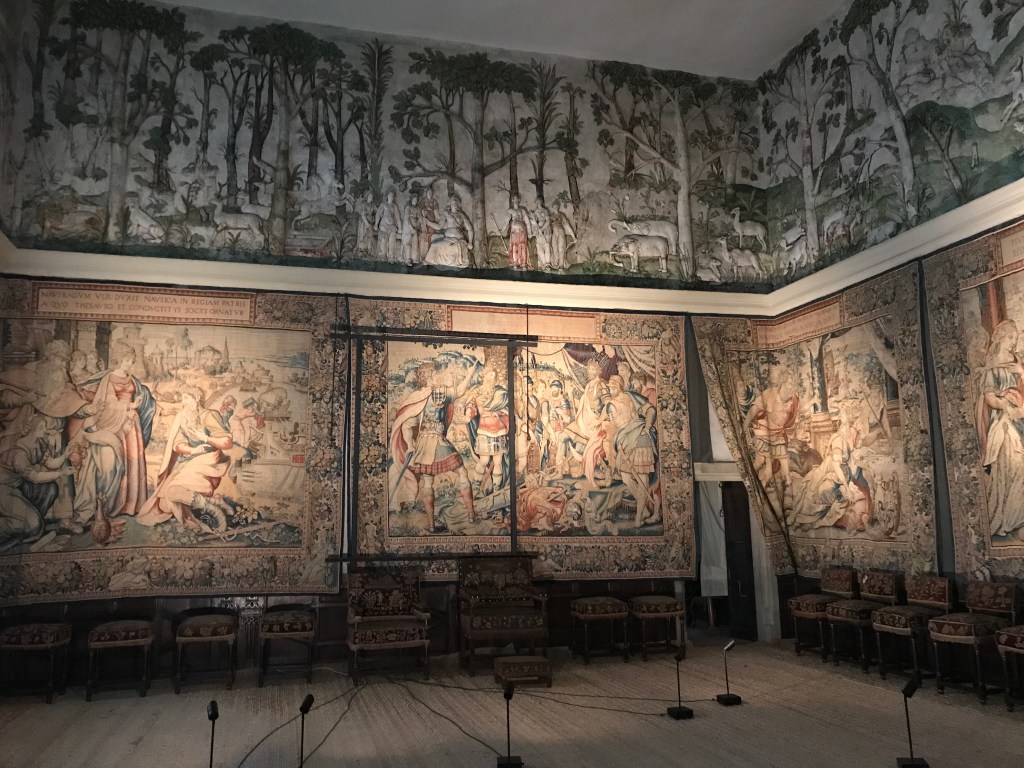
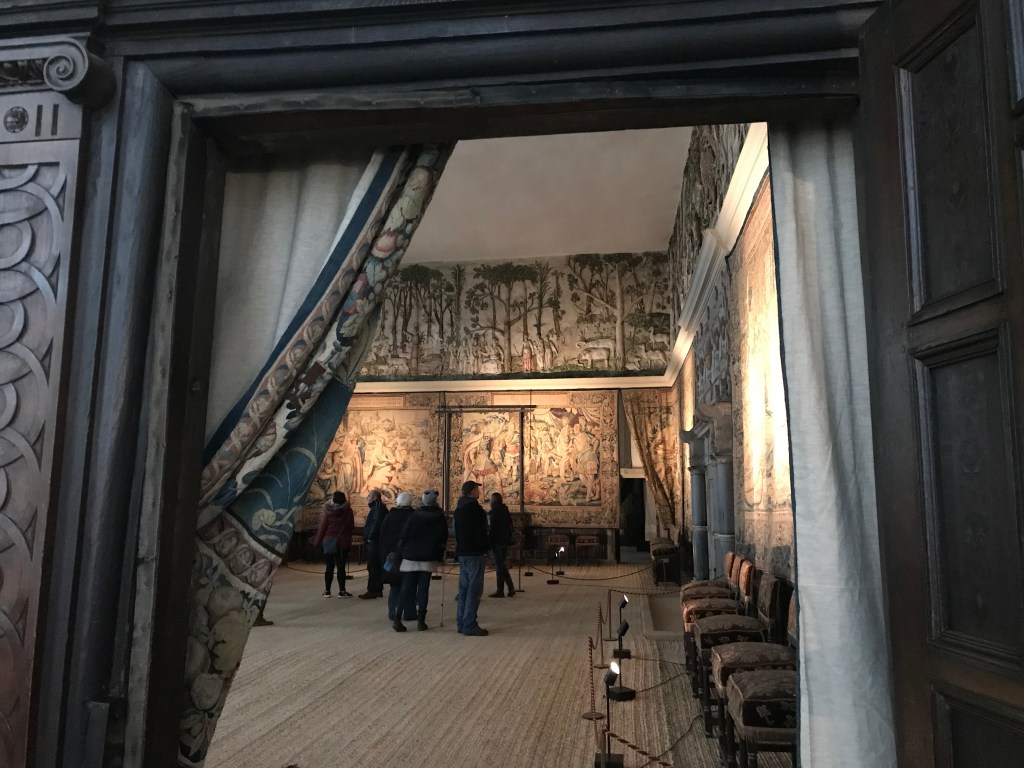
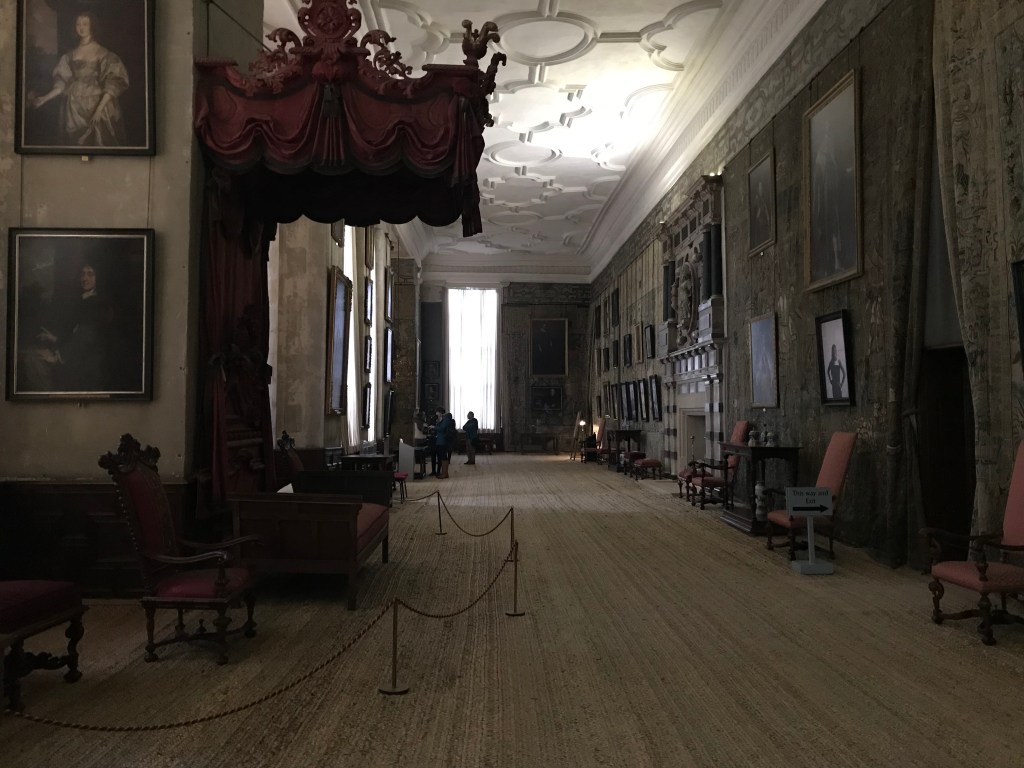
The most striking thing about the inside of Hardwick is the ubiquitous tapestries. They are in every room, on the staircases, on the ceiling in the chapel (of course the house has an inbuilt chapel), and she even built an epicly long picture gallery to hang more tapestries. It’s a bit much.

Despite the overdose of tapestries, it did bring about an excellent story shared by one of the lovely volunteers – a painter had been brought in to brighten up the tapestries, including the fading latin lettering at the top. Unfortunately, he didn’t know Latin, and clearly hadn’t written down the text before starting, so now lots of the Latin inscriptions make absolutely no sense because he just made it up. Flipping tradesmen.
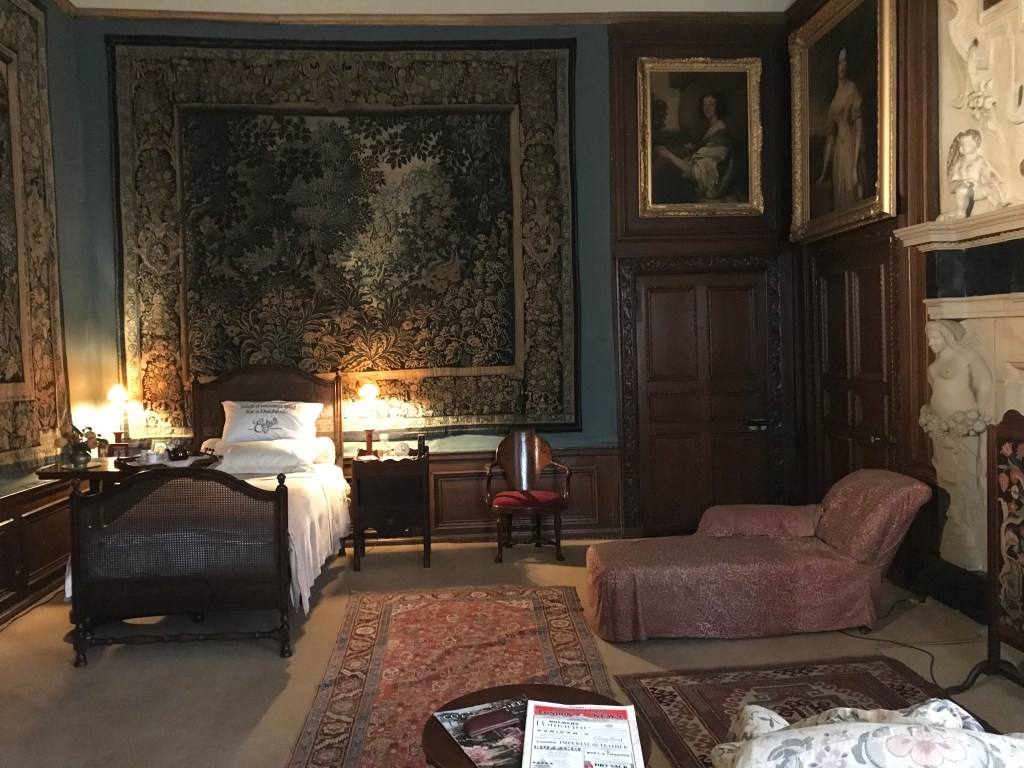
Bess died in her 80s in 1608, in the bedroom below. She had outlived four husbands, birthed eight children, been step-mother to about a dozen more, and used each of her marriages to accumulate more wealth and status, as well as working to ensure the comfort of her children for many years to come.
So all in all, a pretty kick-ass woman. Especially for her time.
Verdict: Great story behind a grand house. And bloody loads of tapestries.
 A Year of Trust