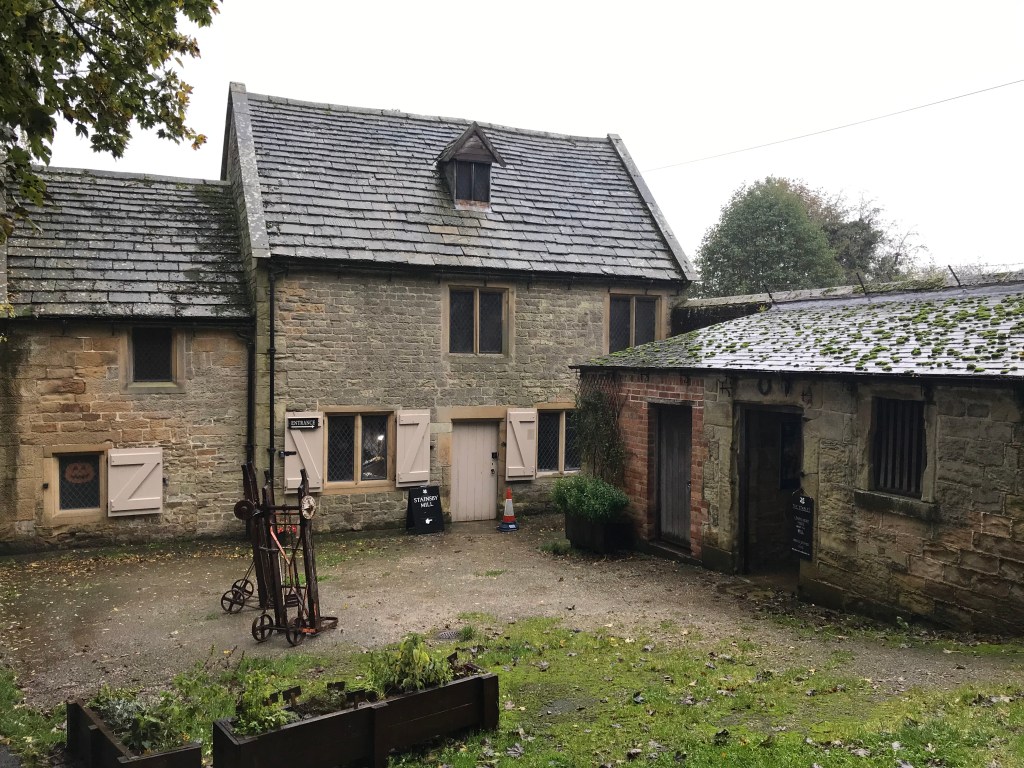
A rainy autumnal October Saturday seemed the perfect day to visit a water mill in the Derbyshire countryside, so I did.
Stainsby Mill is part of the Hardwick Estate – a some 200 acres of sprawling countryside, a couple of grand houses, and this little National Trust gem.
Incredibly, there has been a mill on this little plot of land for 800 years, with the earliest documented evidence dating back to 1216. To put this into perspective, this was the Middle Ages in England – the Magna Carter had just been signed, France had invaded England (again) and a nine-year-old King Henry III had been plonked on the throne to stop the French from taking over. Oh, and the Anglo-Scottish border was still being decided. That’s how old it is. No-one knew where to put the ‘Welcome to Scotland’ sign yet.
I digress. A lovely volunteer called Ian kindly gave me and a young couple a guided tour around the mill. It quickly became apparent that Ian was an engineer as we learned about the way a mill worked in more detail than I ever expected. I cannot honestly say I took everything in, but I did leave Stainsby Mill knowing how a mill works, for the first time in my life.
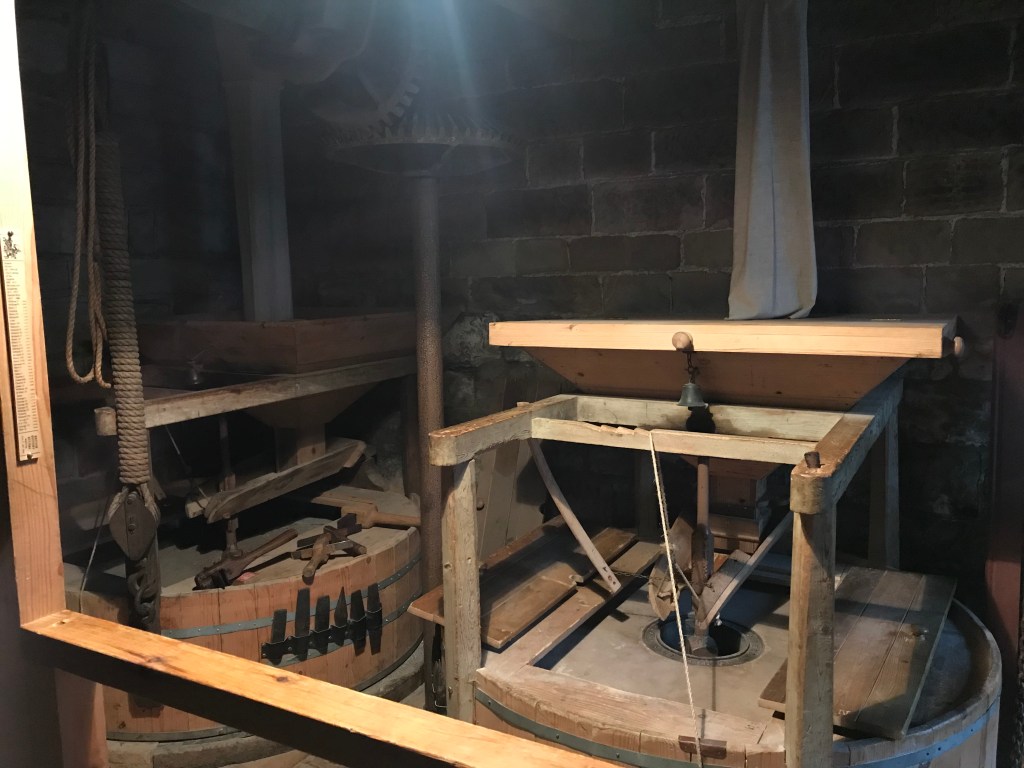
Due to the torrential rain outside, the waterwheel was moving much too fast for the production of flour, but it was fascinating to see the seven-tonne cast iron wheel rumbling away, moving two tonnes of water with every half rotation. Flour is still milled at Stainsby, and is available to purchase too so you can feel really smug and wholesome.
There are two millstones at Stainsby – one made of Derbyshire stone which produces rougher flour which was used by the general public, and a French Burrstone quarried near Paris which created much finer flour for the gentry living in Hardwick Hall.

The mill also houses one of the last surviving mill kilns – used for toasting the grain before it was milled.
Apparently milling happens every Wednesday and most Saturday mornings if you did want to see it in action.
Verdict: Excellent extra stop when visiting Hardwick Hall.
 A Year of Trust