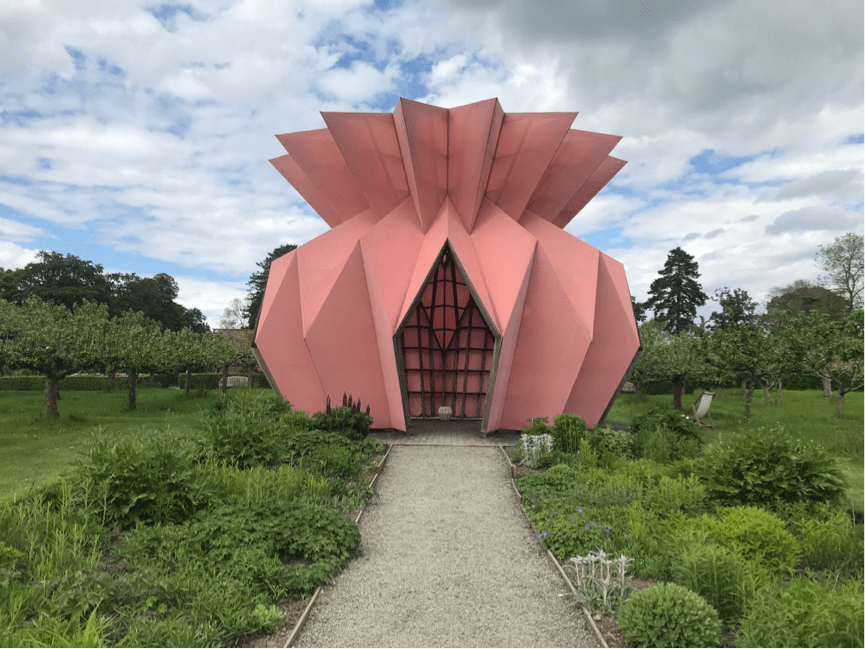
A giant pink pineapple was not on the list of buildings I expected to see during this year of trust.
Nevertheless, it is currently a key feature in the gardens at Berrington Hall, designed by local artists and intended to be the pavilion from which visitors can admire the ‘pleasure gardens’ (which were designed to be a place of tranquility rather than the more debauch use of the word pleasure had someone like Oscar Wilde been in charge of them).
The gardens of the estate were designed by a famous artist Lancelot Brown, and the walls of the walled garden are apparently one of just two surviving examples by Brown. I can only get so excited by walls and landscape architects I’ve never heard of, and to be honest, other than the enormous peach pineapple, the grounds looked much like those found at other National Trust properties. But whatever floats your boat.
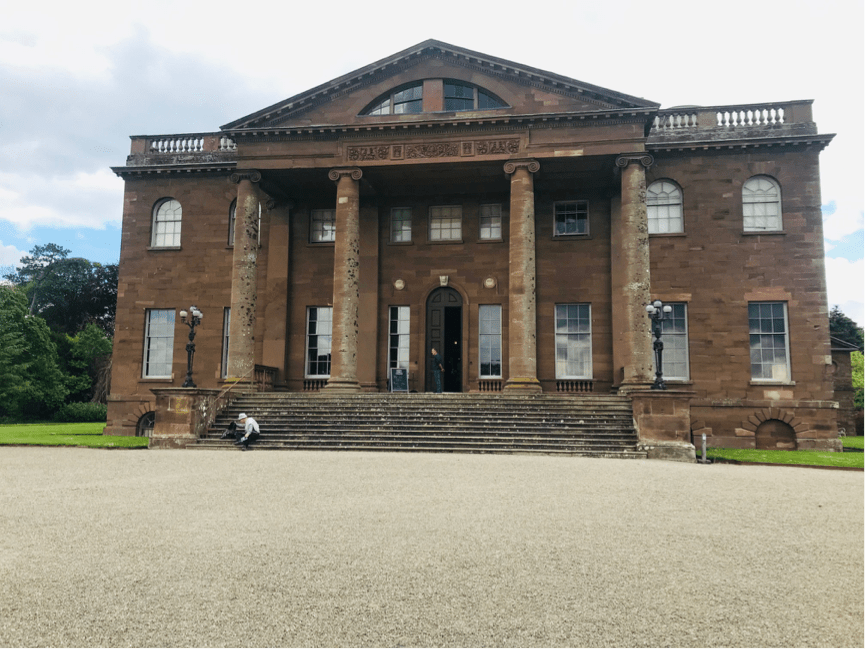
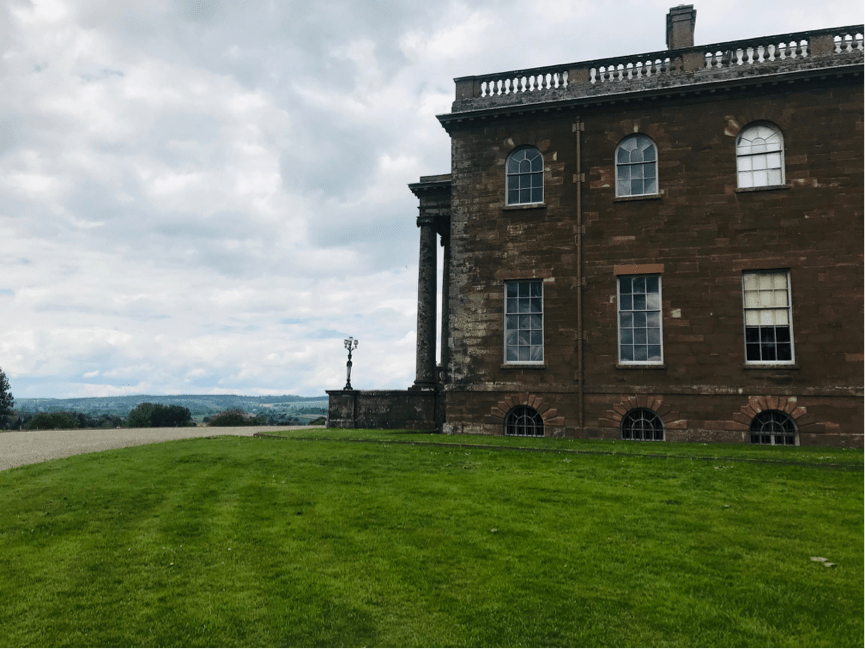
The mansion itself is Georgian and has some fabulously ostentatious hallmarks of the 18th Century – from elaborate rooms and romanesque pillars, to painted ceilings and examples of some of the stupid outfits women were expected to wear – as well as spectacular views of rolling Herefordshire hills.

A banker and former Lord Mayor of London by the name of Thomas Harley (also the namesake of Harley Street in the capital) is responsible for commissioning Berrington Hall, the mansion built to be his retirement home.
When he died in 1804, the estate was handed down to his daughter Anne. Well, sort of, as it actually went directly to Anne’s husband because women couldn’t possibly be trusted with something as important as property. The house became the Rodney family’s ‘summer residence’, and passed through the family for the next 95 years.
In 1864, the heir to the estate was George Rodney, a seven-year-old (still more trustworthy than women, I’m sure we can all agree).
Unsurprisingly, this is where the demise of Berrington began. George retired at the age of 36 so he could be a full-time country gentleman. As well as having four children, George generated vast gambling debts and began selling off paintings, valuable books, and anything else that wasn’t bolted down, presumably hoping no-one would notice that the rooms were becoming a bit empty.
George’s more sensible wife filed for divorce in 1902, and took their children with her.
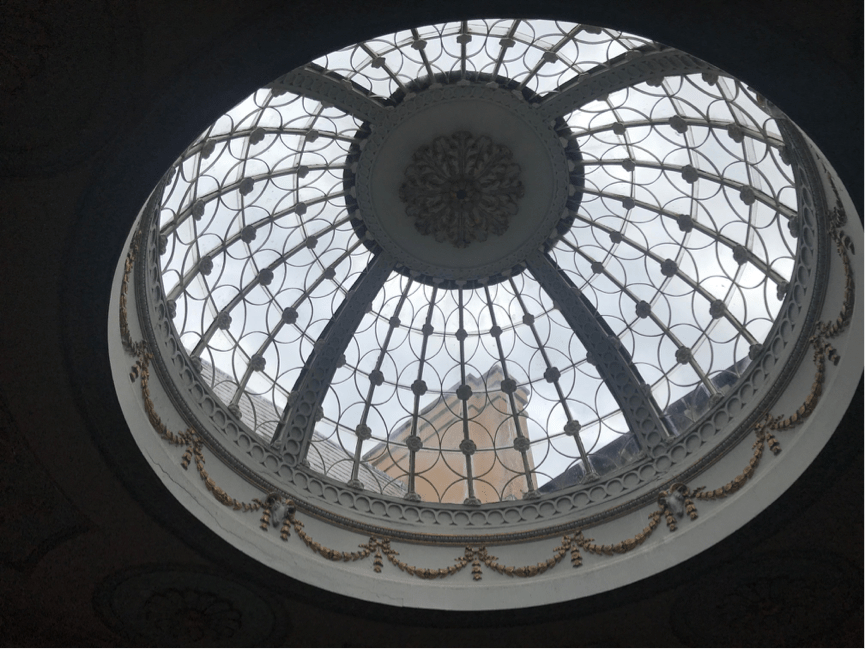
Berrington Hall was then bought by Frederick Cawley, who renovated much of the house and made it look less like it had been ransacked, which I guess it had.
The Cawley’s lived in the house until the 2nd Lord Cawley died in 1954, and the estate was given to the National Trust with one condition – that the elderly widowed Lady Cawley could remain living in the house until her death.
Lady Cawley truly got her money’s worth out of the deal, as she lived at Berrington until 1978 when she died at the grand age of 100.
Aside from the suitably complicated history of the family’s owners, there are a couple of brilliant stories to have come out of my trip.
Firstly, the ‘boudoir’ – a room in the house purposefully designed for the ladies to be able to do lady things in, all within a ladylike atmosphere of pastels and neo-Classical design.
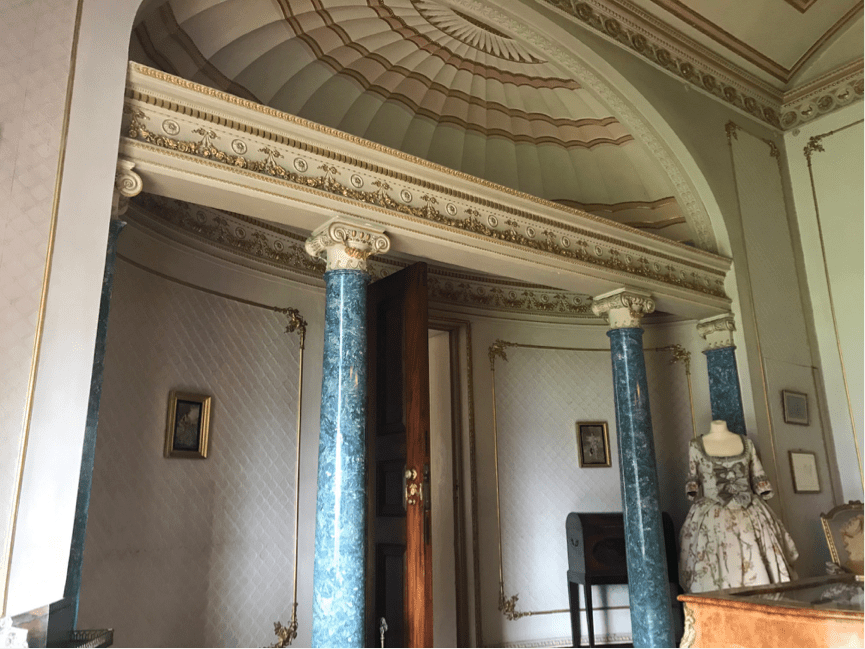
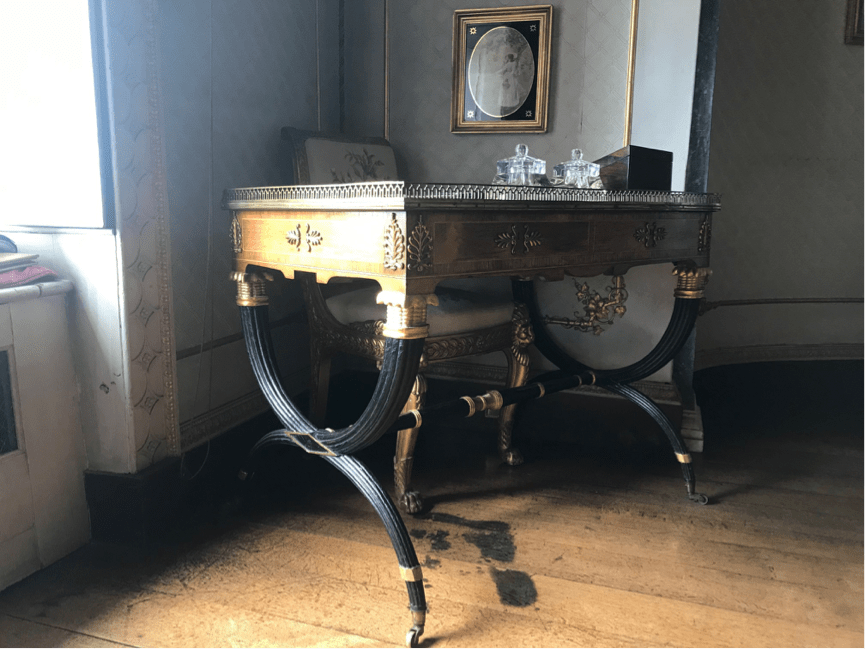
During the world wars when the mansion was used as a hospital, with the boudoir finally being put to decent use as an office.
This did, however, catch a burglar out in 1930 when he broke through the window and knocked over a silver inkwell and walked it into the floorboards where the footprints remain almost 100 years later.
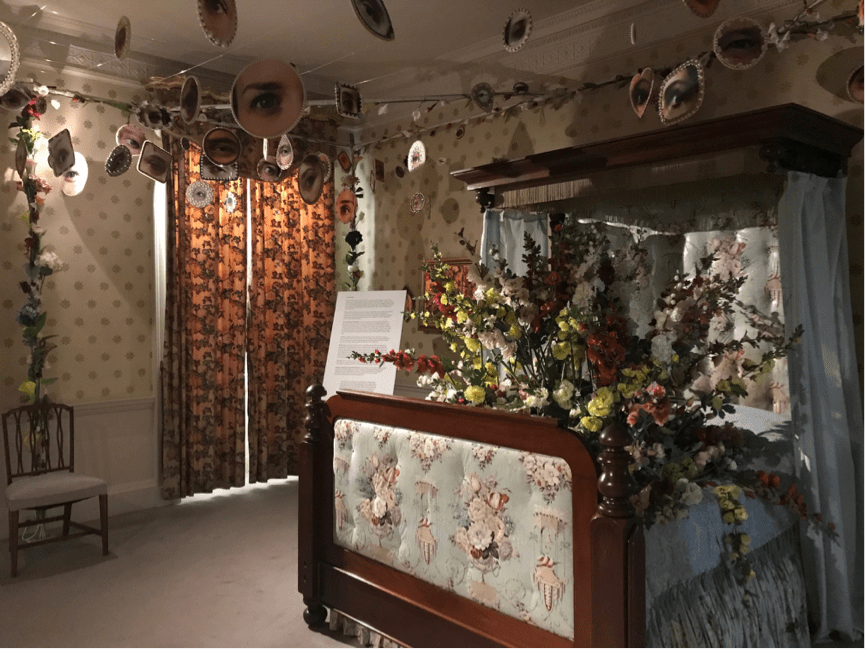
Upstairs, it felt a little like entering the Twilight Zone as the grand bedrooms I was expecting were filled with fake flowers and pictures of eyes hanging from the ceiling.
Not a fan of most modern art, I quickly breezed through to a display featuring the most ridiculous dress I’ve ever seen.
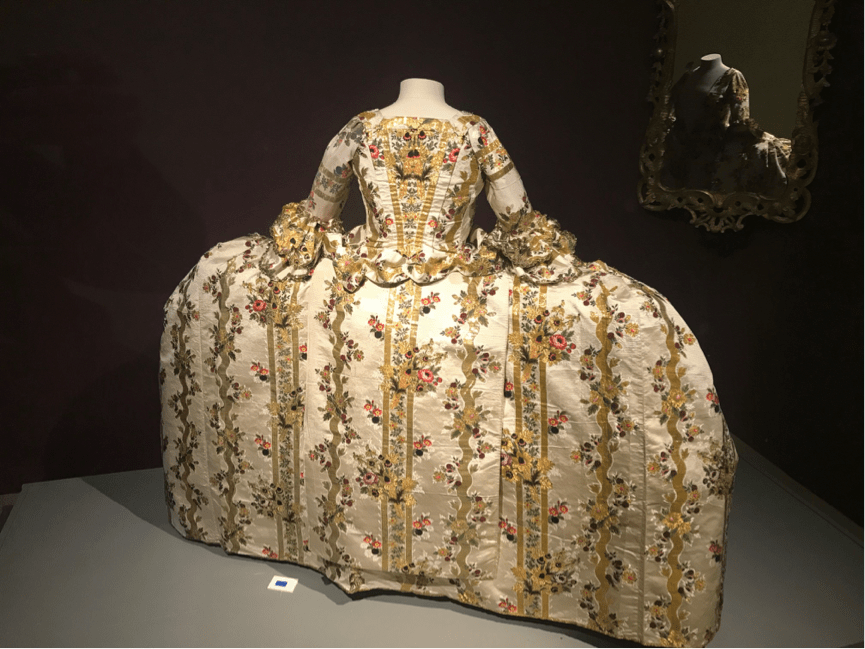
The feminist in me wanted to scream and rile at the fact that this was considered the height of fashion at one time – dresses with hips so ludicrously wide that the wearer had to edge sideways through doors like some weird bejewelled crab, and where she had to pee into a jug when nature called.
So basically incapacitating the woman as much as possible, making all but the slightest movement impossible, so that she was turned into an inanimate object of male desire. Story of our female history.
However, I was captivated by the story of how Berrington Hall came to have this ludicrous dress.
The dress was actually undiscovered in an attic for 230 years. When it was finally uncovered, the owner decided to auction it with Christie’s Auction House. The auctioneers immediately contacted the National Trust as they recognised it as a piece of priceless history, and the National Trust purchased the item.
But the dress arrived in 10 separate pieces as this had been the only way to pack it away 230 years previously. It took historians and seamstresses two years to research how to sew the dress back together, and to complete it. It really is a work of art, but not a style I would ever like to see back in fashion.
Verdict: Well worth a visit for the exhibitions and the story behind the house.
 A Year of Trust