
Knowing today’s adventure included an actual castle, I could barely contain my excitement as a drove from Shropshire into Herefordshire.
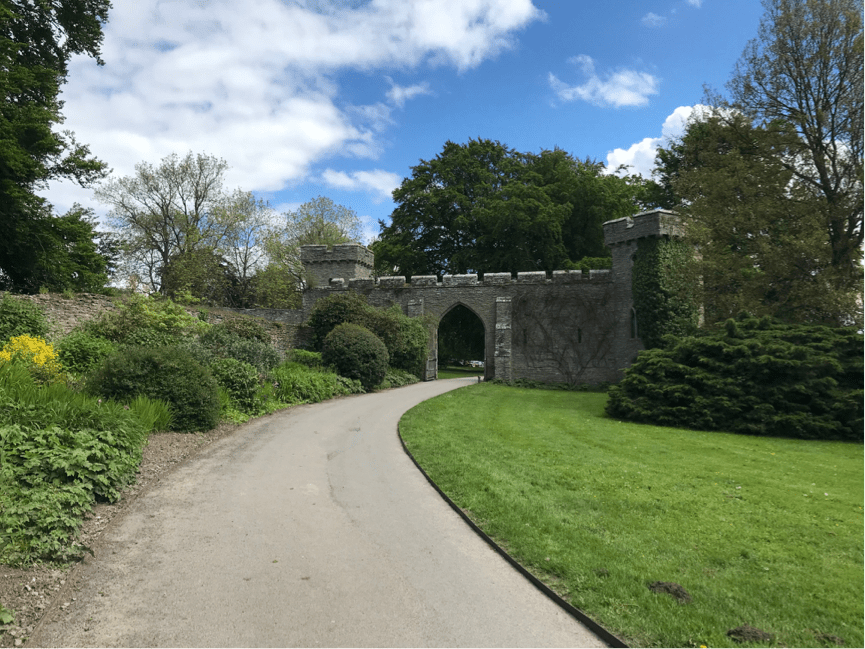
The Disney princess in me was practically bouncing in her car seat as I pulled on to the lengthy driveway, past banks of bluebells and up to a stone gate befitting of a castle.
Once I had parked up and finished faffing, I rushed up to the gate for my first glimpse of an actual real-life castle. And Croft Castle didn’t disappoint – it had turrets and everything.
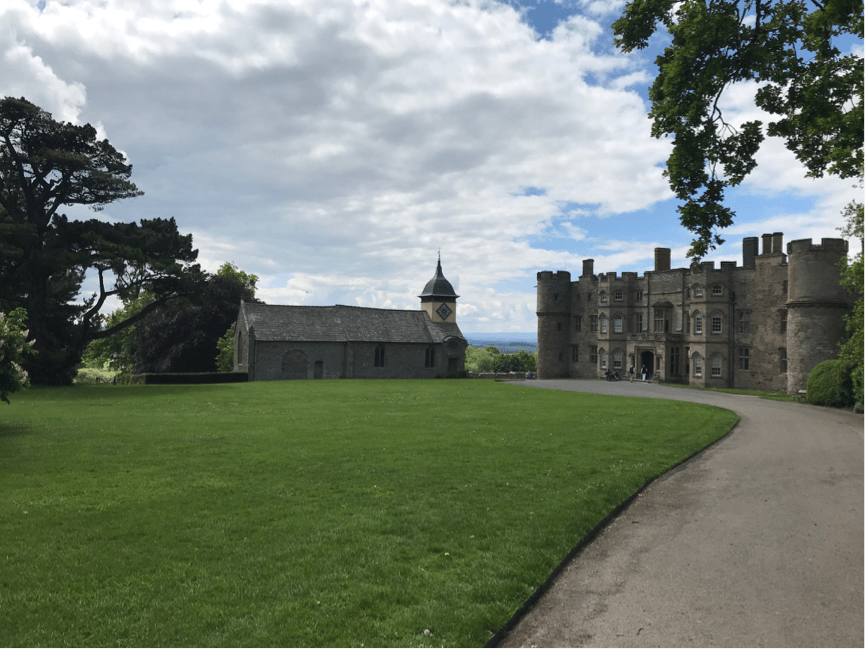
Set in 1,500 acres of woodland and farmland, with it’s own church and spectacular views across the Herefordshire countryside, the various iterations of Croft Castle have been home to the Croft family for an incredible 1,000 years.
The first house to stand on the land is listed in the Doomsday Book and would likely have been made of wattle and daub. The original castle was built on the site in the 15th Century, but the family made the gut-wrenching decision to deliberately tear it down during the Civil War so that Cromwell’s forces couldn’t use it to their advantage.
Once the war was over and the family returned, the castle stones were salvaged and now enclose the walled garden adjacent to the house.

The Crofts took the opportunity to build a U-shaped fortified house in 1660, which has been added to by various generations over the years.
In around 1760, the family converted the castle into a Georgian house by filling in the middle bit of the U-shape and therefore creating a contained house. They did, however, keep a little courtyard in the centre of the castle, which reminded me a little of a monastery.
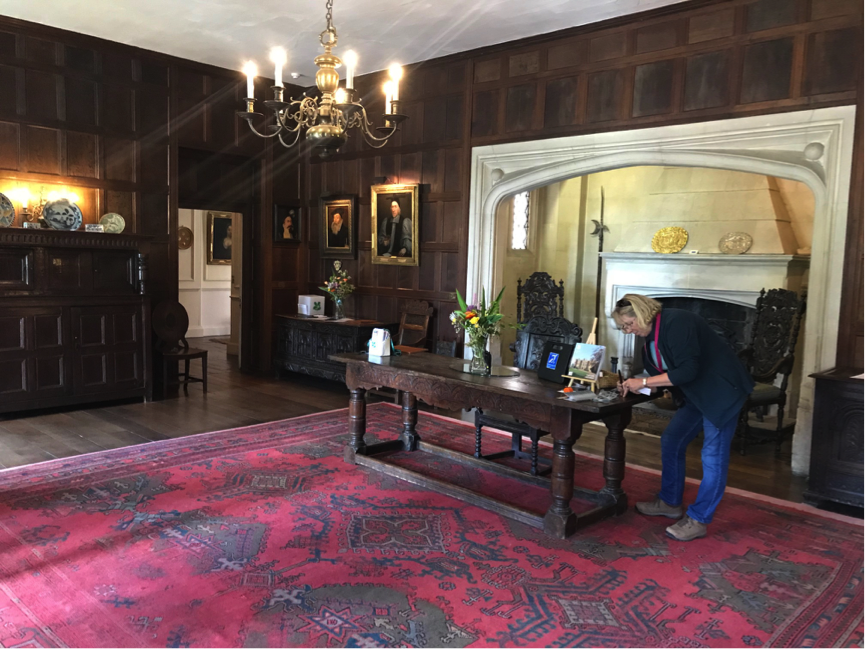
As you would imagine in any good castle, visitors enter through majestic wooden doors, walk through a porch bigger than my living room, and into a grand hallway with an oversized fireplace and dark panelled walls. It was suitably intimidating.
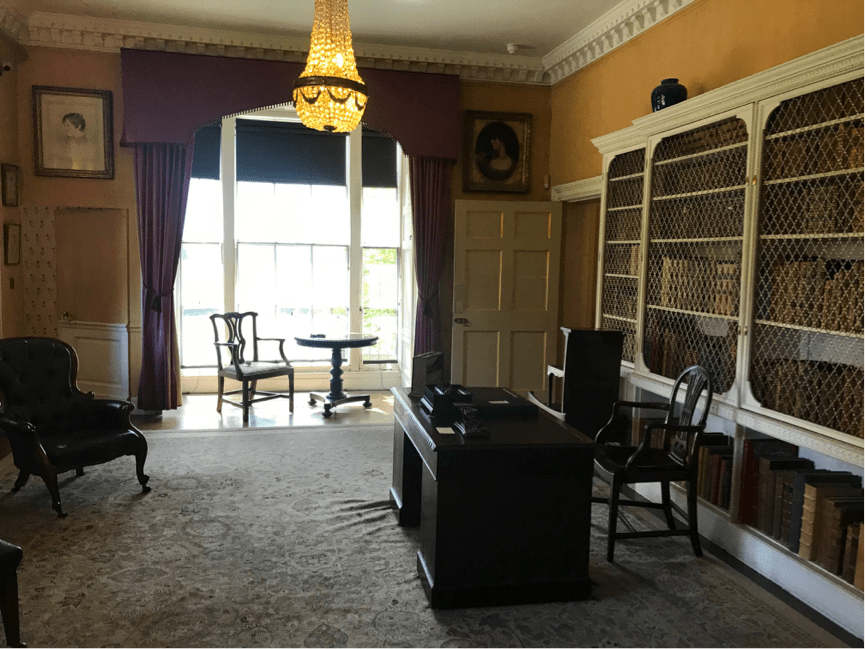
On this mini-tour of National Trust houses in the West Midland countryside, I was learning that quite a few of them had used by schools in the Second World War to protect children living in the cities. Croft Castle was no exception as it became home to St Elizabeth’s School – an all-girls Catholic school complete with nuns in silly horn hats.
In fact, as the war progressed it also became home to boys evacuated from Birmingham, although the two genders were never permitted to mix and even had separate mealtimes and lessons to prevent fraternising. I like to hope there are some romantic stories of kids finding ways round the nuns to pass love notes or catch glimpses of each other. I know I would have done.
As if the nuns weren’t scary enough, if any of the 200 children misbehaved, they would find themselves locked in the turret room off the Mother Superior’s office (left hand corner below) – not exactly the Disney childhood I had imagined living in a castle to be like.
Of course, what would a castle be without extensive gardens and outhouses – or in this case, its very own church which is actually still in use today.
St Michael and All Angels Croft is a quaint little Protestant chapel which must have the best views of any church in the West Midlands. Despite it being a warm spring day, it was chilly inside the church, so it’s hard to imagine how bitterly cold it becomes in the depths of winter.

Also in the grounds are a couple of National Trust holiday cottages, a glasshouse, carefully tended gardens, and (my favourite) its very own vineyard. That’s the dream – a castle with it’s own vineyard.

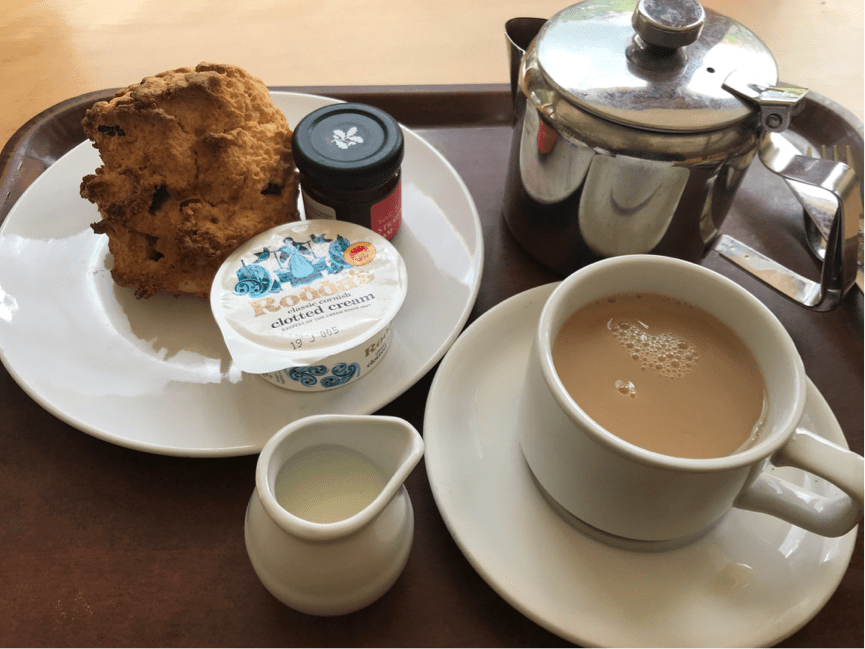
On a side note, I can highly recommend the cream tea at Croft Castle’s tea rooms. The cakes looked excellent as well…
Verdict: First castle I’ve ever visited, lived up to expectations
 A Year of Trust