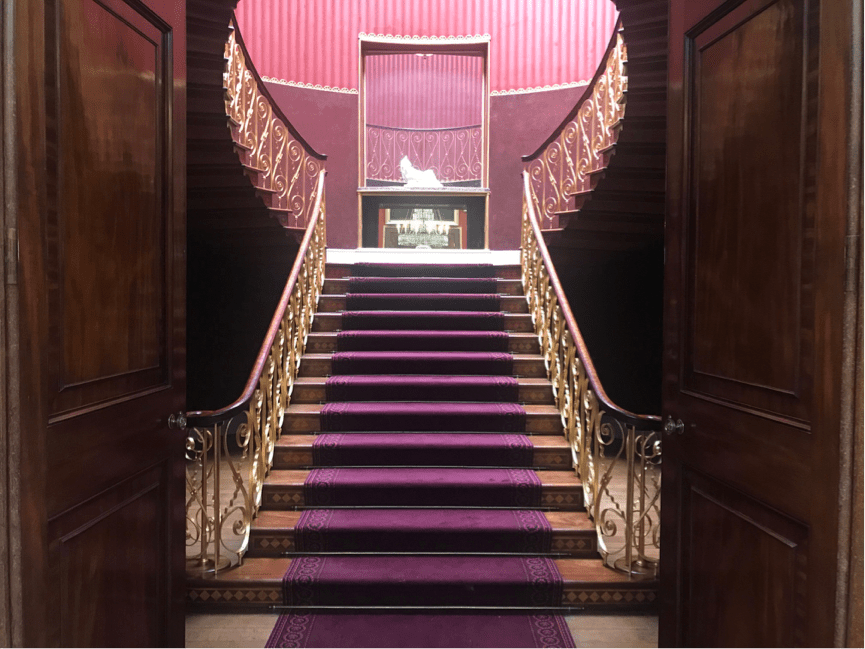
Everything about Attingham Park is vast.
The estate – vast. The house – vast. The rooms and their grandeur – vast. The cows blocking the driveway up to the mansion – vast. The debt that the 2nd Lord Berwick amassed leading to his bankruptcy – vast. You get the gist.
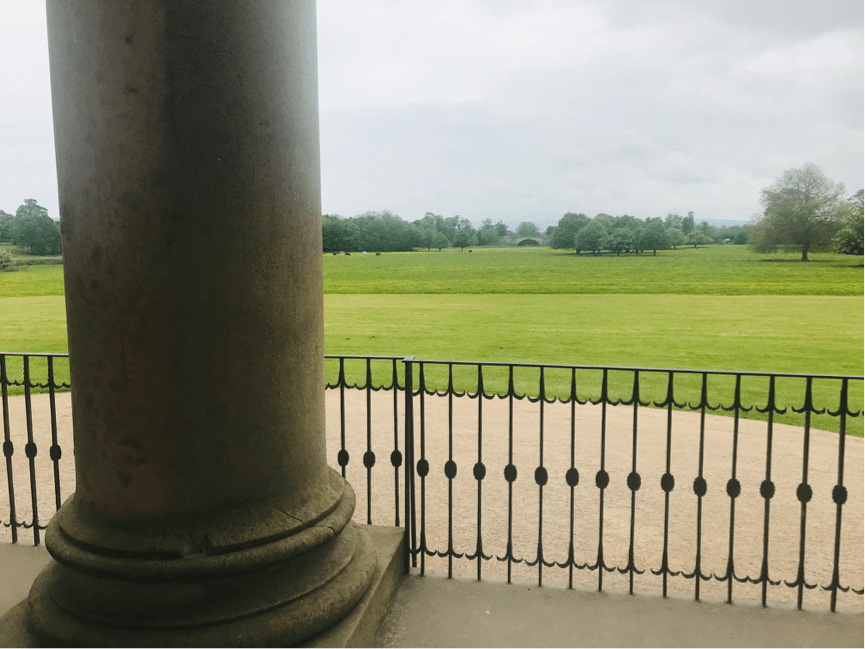
But seriously, the estate is enormous, comprising 4,000 acres, and it’s only half the size it was back in the 1800s. It stretched for a good couple of miles as I was driving along from Telford, and that was before I had even reached the intimidating gate leading to the lengthy driveway leading to the imposing house.

Attingham Park is officially a mansion, and there was actually a house on the site before it was built – Tern Hall. The house originally belonged to the Hill family who at one time was the third richest family in London and occasionally leant money to the king at the time – King Henry VIII.
Unfortunately the thrifty nature if the Hill family did not get passed through the generations to the Lord Berwicks along with the Attingham Park estate. The 2nd Lord Berwick inherited the property and quickly got to spending his fortune.
Tern Hall was enveloped by what is now Attingham Park house, and seamlessly incorporated into this new mansion.
In a flashback to Ickworth House I had visited just a couple of months ago, the ground floor of the house had been divided into masculine and feminine halves.
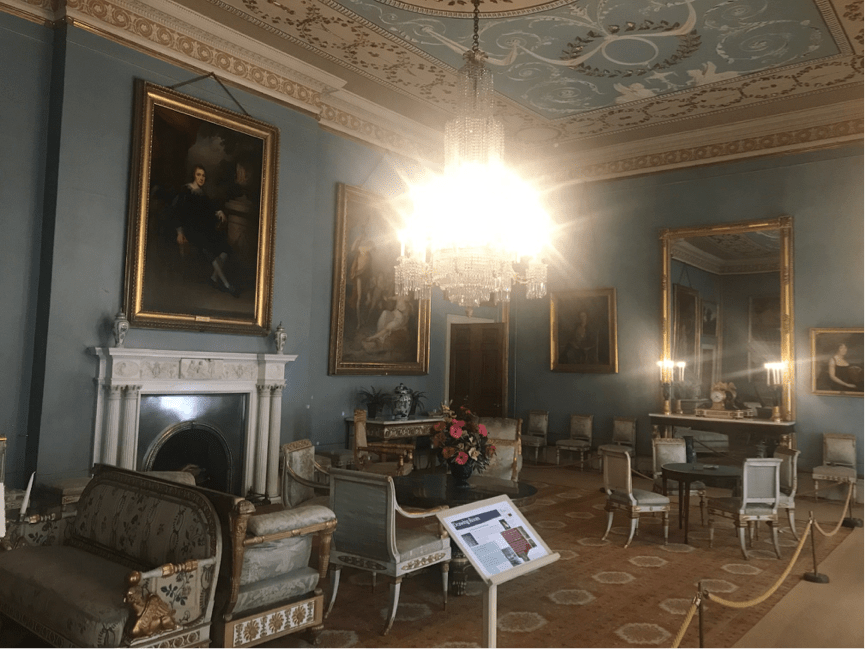
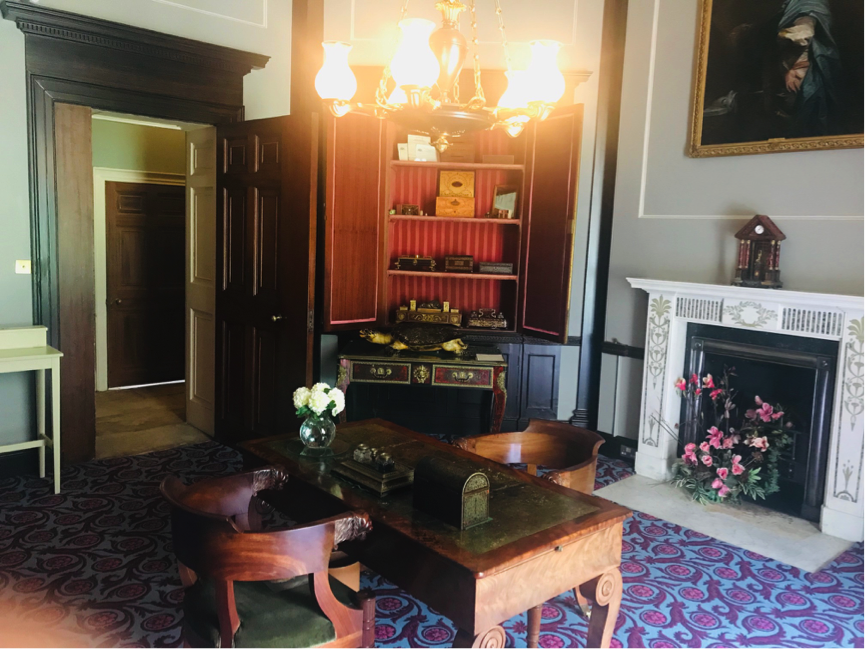
The side reserved for ladies includes a grand sitting room with an impressive chandelier – which is actually only half the size of the one which lit the room before the family’s financial collapse – an ante-room for another reception room and a ‘boudoir’, presumably for more sitting. Because that’s all women did, right?
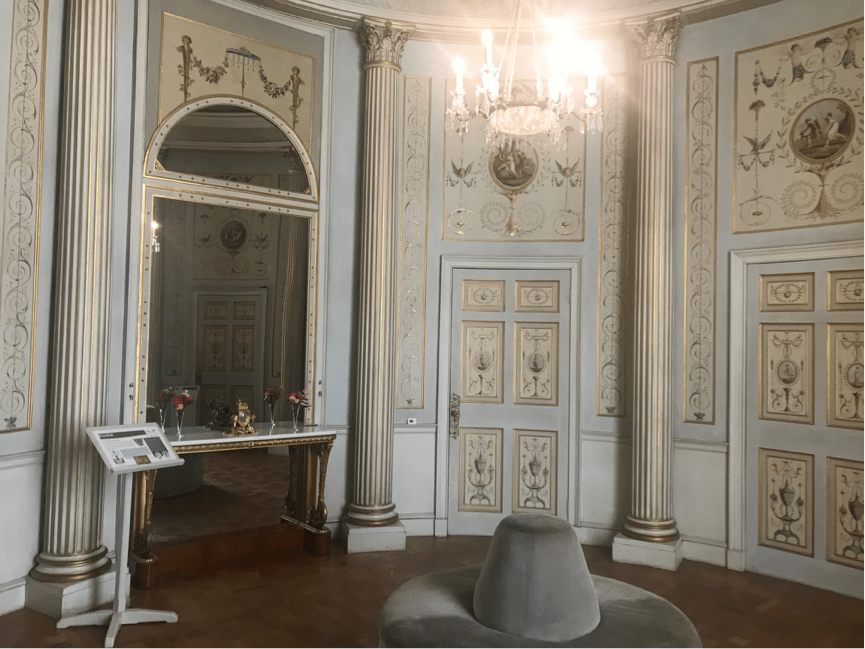
Meanwhile, the gentleman’s side of the house mirrored the women’s side, but was designed to be more useful because men were allowed to do things other than just sit and look pretty.
The ‘boudoir’ of the men’s side was ‘The Octagon room’ – an office, the two reception rooms were libraries, and the equivalent of the sitting room was a large art gallery.
Off this art gallery is a Titanic-esque staircase in a fetching shade of magenta. But it’s only when you reach the top of the stairs and look up that you can truly appreciate the staircase. The fish-scale ceiling has more than 11,500 tiles beautifully arranged around the domed stained-glass dome.

In another similarity to Ickworth, the (vast) servants quarters below the house have been opened up to visitors. Of course a network of rooms would have been necessary to keep the house above running smoothly.
It was down here that I found my favourite room of the house – with wallpaper made from maps, and where each of the servants bells denoted which of the many rooms the demand was coming from.

This life of extravagance eventually toppled the estate into bankruptcy. He also had some fairly questionable morals when it came to women – taking up with the 15-year-old mistress of another Lord when he was in his 40s. He eventually married Sophia when she had matured to the age of 17.
The bankruptcy saw the house gutted of furniture and decorations, and it was only saved when his younger brother stepped in to lease the hall. The 2nd Lord Berwick did a runner to Italy with his youthful wife, and died there in his 60s.
Thankfully, the final owners of the house – the 8th Lord and Lady Berwick were thrifty and benevolent, and the house had many incarnations during their lifetimes (including as a temporary hospital in the First World War), before finally being bequeathed to the National Trust in 1947 and making it one of the most generous gifts ever received by the charity.
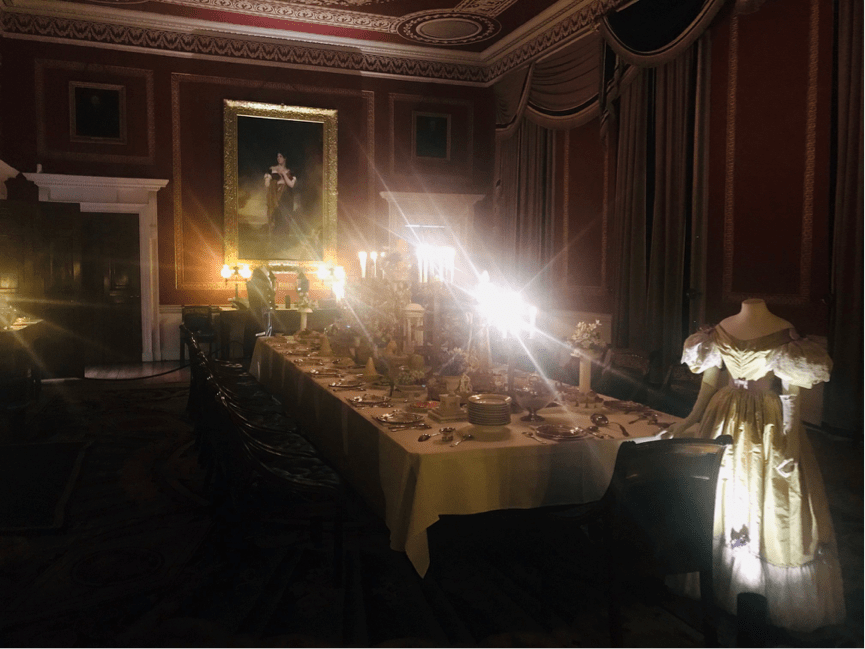
One of these reincarnations was as a temporary school for evacuated pupils from Edgbaston Girls’ School in Birmingham during the Second World War, with the large dining room being used as the assembly hall for the school.
Then, when the house was let by the Adult Education College, the dining room became a lecture theatre. Today it’s been returned to its former glory as a dining room.
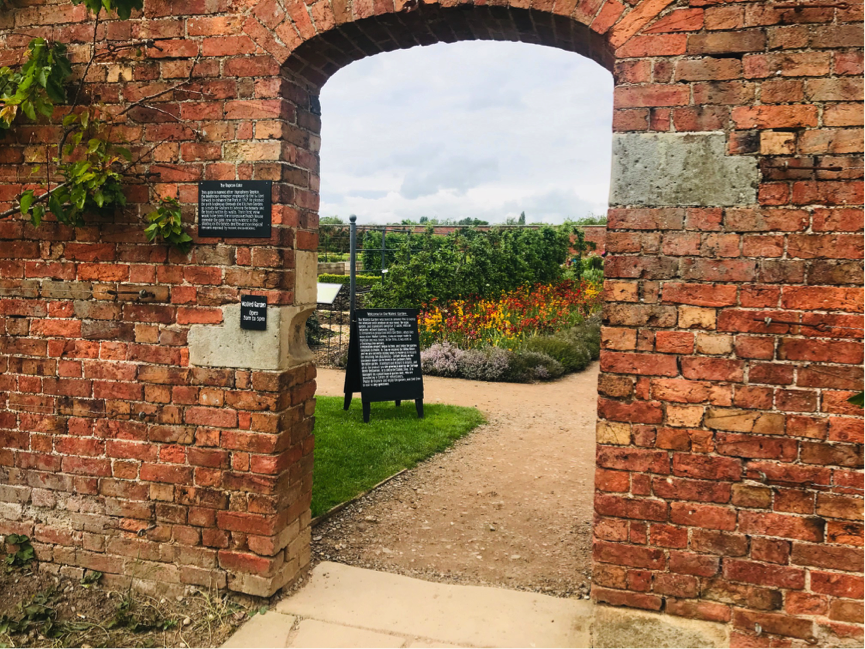
As well as the eclectic history of the house, the gardens are well worth a look – including the walled garden, the peaceful mile-walk in the grounds (considered the short walk) and deer and cows grazing on the land.
Just off the walled garden were a couple of extra gems that I was so glad I didn’t miss – the first a transparent bee hives for visitors to see how honeycomb and honey is created. The second is the boiler house – with the ‘new’ boiler installed in 1920 to heat the greenhouses after the old one exploded. Although this ‘new’ one isn’t running either now a century later, not due to maintenance or engineering, but because the lining was made from asbestos.
Verdict: Vast.
 A Year of Trust