The visit to Belton House did not go as planned. Although I hasten to add, through no fault of the National Trust.
It was just one of those days where the universe reminds you how little control you actually have on your day to day life, and while this can be exciting, it can somewhat scupper days reserved for National Trust outings.
It began with my retro work pager going off (the NHS loves the 90s God bless it) for some media crisis or another, and moments later my companion (for whom this was her first ever visit to a National Trust property) and I came across a road traffic collision.
Thankfully, said companion is medically trained so sprung into action to look after those involved in the incident, and the rest of the emergency services weren’t far behind to help sort out the mess of mangled metal.
Two hours later than planned, we arrived at Belton House near Grantham, having made the decision to plough on with our visit – partially because we knew there would be a National Trust cafe with traditionally excellent coffee and cake. Which there was.
They say that trouble comes in threes, and our third for this particular day was that only the house (and obviously the cafe) were open due to high winds, so the vast park was closed.
Unperturbed, we ventured into the house to have a nose around and to explore its history.
Two things immediately struck me about Belton House:
- It is really dark and frankly a bit gloomy.
- All the volunteers are the complete opposite – remarkably welcoming, incredibly upbeat and impressively knowledgeable – both about the house and the families who have lived there.
The house itself isn’t especially remarkable – it’s not seen much structural change since it was built in 1688 and looks much like lots of other stately homes dotted about England. Which is probably ironic given it has been heralded as ‘the most complete example of a typical English country house’ (thank you Mr Wikipedia).
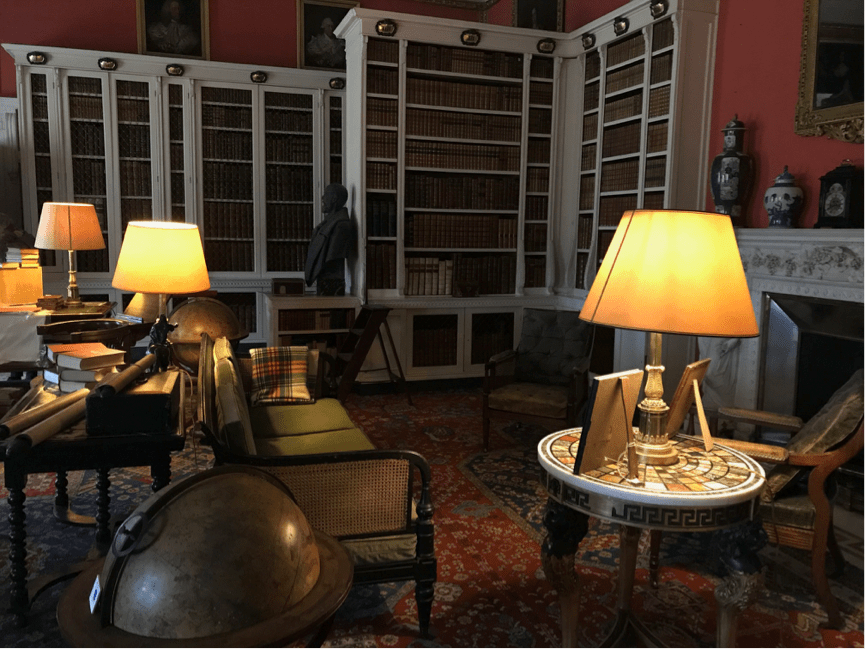
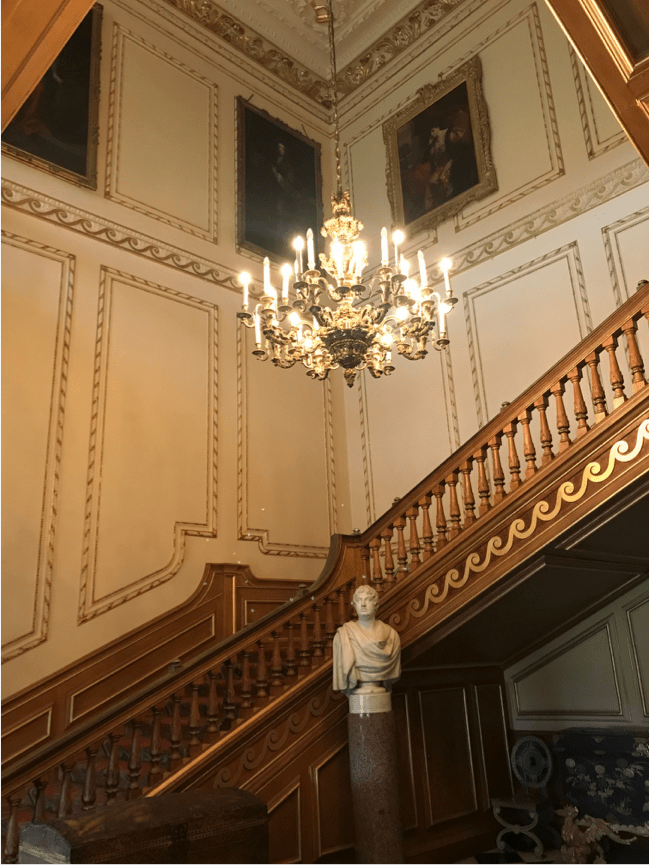
It may simply have been that it was a grey and cloudy day outside, but the rooms were poorly lit and many painted in dark colours, and thus the house felt imposing and heavy as we wandered around it. This dimness did, however, suit the well-stocked library of the house, sparking images of curling up with a book in front of a roaring fire accompanied by low lamp-light.
What I did enjoy, however, were the unusual items in the rooms throughout the house.
One of the first rooms we entered, the sitting room, had floor to ceiling tapestried walls, and even the backs of the doors were tapestried to create a full 360 degrees picture.
The volunteer based in this room kindly shared with us the marvellous story of how these ornate designs had actually been inadvertently used as rugs for many years, and it was only when they were rediscovered by one of the owners that they were installed on the walls.
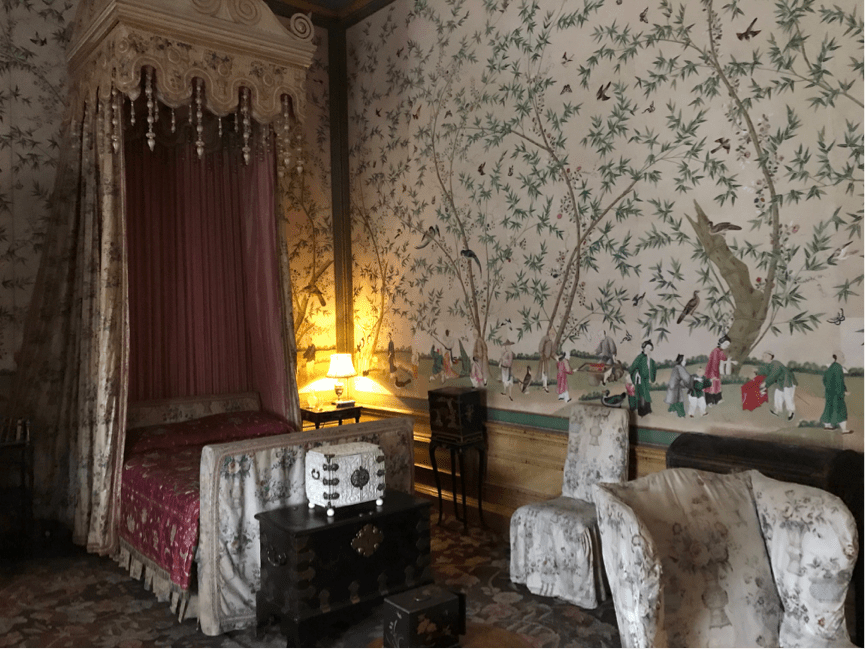
Another bedroom was designed in a Japanese style – with embroidered scenes of trees, birds and families across the walls, and an opulent gold and red bed and canopy. The attention to detail was spectacular, as the skirting boards and the corners of the room had all been meticulously hand-painted to resemble bamboo.
Yet, I feel rather guilty that this is my review of Belton House, as I’m not sure it had a fair visit given the circumstances of the day. Perhaps I would have had a different impression should it have been a straightforward journey on a sunny and breezeless day.
Thus, unlike with any venue I have visited so far, I vow to give Belton House a second chance at some point in the summer, so do look out for an update in the coming months.
 A Year of Trust